Osun-Osogbo Sacred Grove
Centuries old; UNESCO World Heritage Site since 2005
Osogbo, Osun State, Nigeria
The Osun-Osogbo Sacred Grove is a forest of about 75 hectares on the edge of Osogbo in southwest Nigeria, held to be the home of Osun, the Yoruba orisha of the river that runs through it. Its shrines and sculptures were restored from the 1960s by artists working with the Austrian-born priestess Susanne Wenger. It became a UNESCO World Heritage Site in 2005, and every August a twelve-day festival ends with a procession from the town to the grove.
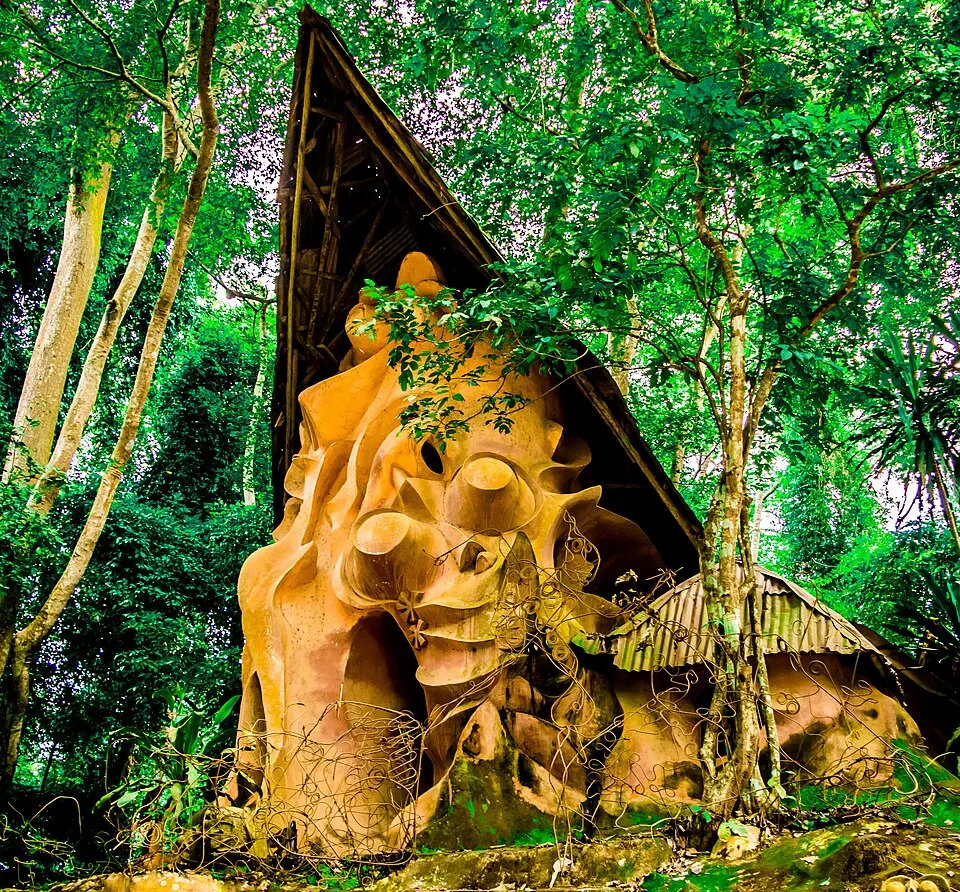
A forest held sacred
The Osun-Osogbo Sacred Grove is a stretch of dense forest along the Osun River on the edge of Osogbo, the capital of Osun State in south-western Nigeria. For the Yoruba it is the home of Osun, the orisha (divine power) of the river, associated with fresh water, fertility and care for the people of the town. The grove covers about 75 hectares, with a larger buffer zone around it. It holds shrines, sanctuaries, sculptures and works of art dedicated to Osun and to other orisha, set among paths along the river.
Sacred groves were once common on the edges of Yoruba towns. Many were lost to farming, building and changes in religious life. UNESCO's nomination describes Osun-Osogbo as probably the last sacred grove of Yoruba culture, which is one reason it was added to the World Heritage List in 2005.
The grove and the town
According to tradition, Osun promised protection to Larooye, the founder of Osogbo, and the pact was sealed with a sacrifice; the site management plan says the title of the town's king, the Ataoja, comes from that first offering. The first palaces of the Ataoja and the first settlers stood in the grove. These accounts are tradition, not documented history. Sources often call the grove's tradition centuries old; some give a figure of more than 700 years, but no exact date can be confirmed.
Decline and revival
By the middle of the 20th century the grove was under threat. Shrines had fallen into ruin, land speculators and poachers moved in, and the yearly festival had shrunk to a small number of devotees.
The revival is closely linked to Susanne Wenger, an Austrian-born artist who came to Osogbo around 1950 (sources differ on the exact year), became a devotee of the orisha, and was given the title Adunni Olorisha. With a group of Osogbo artists she founded what became known as the New Sacred Art movement. Over several decades they rebuilt shrines and made new gates, walls and large sculptures for the Yoruba deities, while working to protect the forest from speculators and poachers. Through these efforts the grove was declared a Nigerian national monument in 1965. UNESCO's nomination file names the New Sacred Art and Wenger's absorption into the Yoruba community as part of the reason the grove was worth protecting.
Her work was not welcomed by everyone. Some critics, both in Nigeria and abroad, questioned whether new sculptures by an artist from outside belonged in an ancient sacred place. The New Sacred Art should also not be confused with the secular Osogbo school of painting of the 1960s, which grew from workshops of the Mbari club. Wenger died in January 2009, aged 93.
The Osun-Osogbo festival
Each August the grove hosts the Osun-Osogbo festival. It lasts about twelve days and ends with a great procession from the town to the grove, where offerings are made to Osun at the river. Once nearly forgotten, the festival now draws thousands of devotees, visitors and tourists from Nigeria and from across the world.
Why it matters
Osun-Osogbo is both a living place of worship and a rare survival of a once-common Yoruba landscape. It shows how a forest, a river, a town and its rulers, and generations of artists can together keep a sacred tradition alive.
Achievements
- About 75 hectares of forest, with a 47-hectare buffer zone
- 1960s onward: Shrines restored by local artists working with Susanne Wenger
- 2005: Inscribed as a UNESCO World Heritage Site
- Yearly Osun-Osogbo festival each August, ending with a procession to the grove
Related entries
Sources
- UNESCO World Heritage Centre, nomination file for "Osun-Osogbo Sacred Grove" (1118) (Primary source)
- "The Osun Groves in Osogbo", The Nigerian Field 70 (via Archaeology Data Service) (Scholarly)
- UNESCO World Heritage Centre, "Osun-Osogbo Sacred Grove" (inscribed 2005, ref. 1118) (Reference)
- Google Arts & Culture with the Adunni Olorisha Trust, "Ẹ káàbọ̀! Welcome to the Sacred Ọ̀ṣun Òṣogbo Groves" (Reference)
Share and cite
Cite this page
“Osun-Osogbo Sacred Grove.” Kemet to Now, https://kemettonow.com/entry/osun-osogbo-sacred-grove.
Spotted an error or have a better source? Suggest a correction.