Ancient African astronomy
From the Neolithic Sahara to Timbuktu's manuscript libraries
Across Africa: Nile Valley, Sahara, Horn of Africa, Great Lakes, Sahel
Africans watched the sky to keep time, plan farming and herding, align monuments and train scholars. This guide gathers nine sites, objects and traditions, each labeled by how strong the evidence is.
Why this guide exists
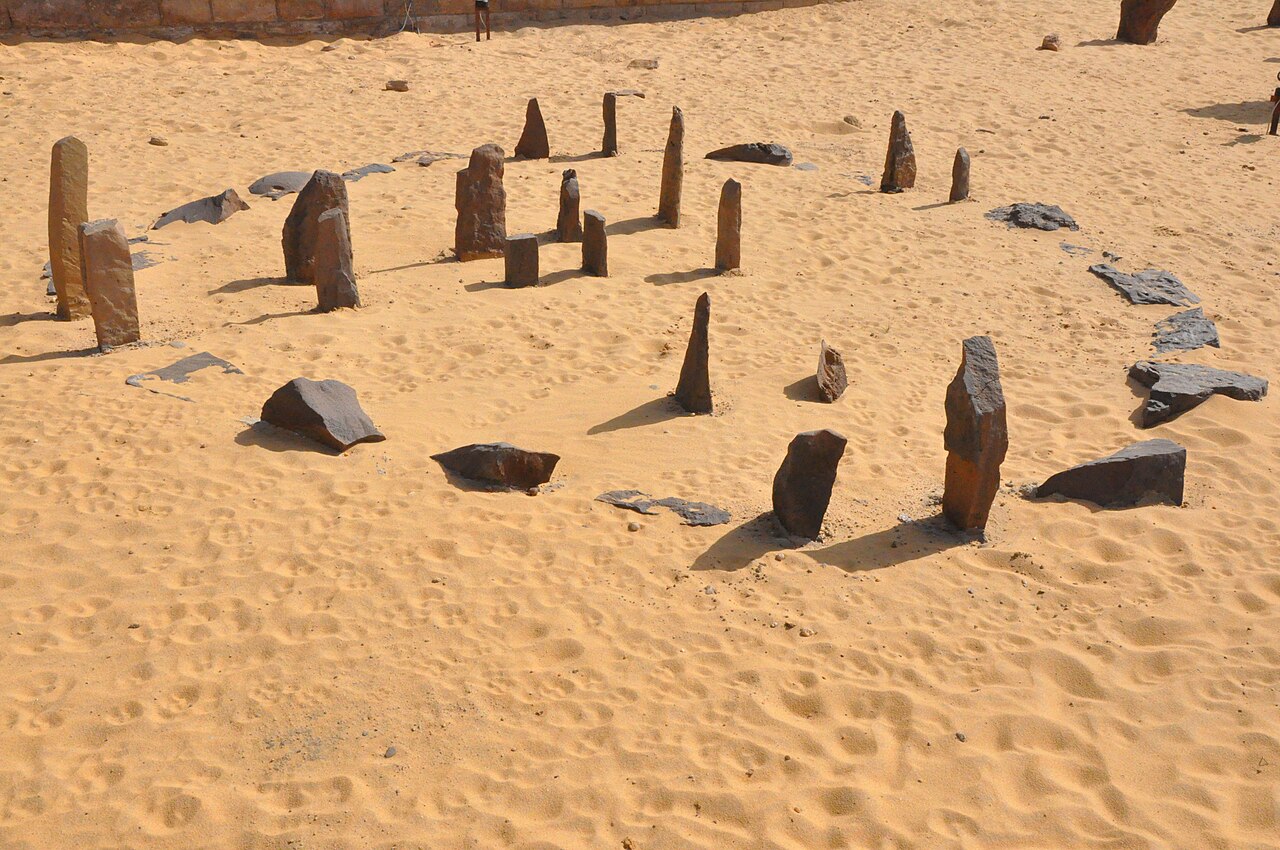
People across Africa have read the sky for thousands of years. Herders in the Sahara set stones toward the midsummer sunrise. Kemetic priests divided the night by the rising of star groups and tied their new year to Sirius. Pyramid builders found true north with remarkable accuracy. Scholars in Timbuktu copied and taught books on the movements of the stars. Borana elders in Ethiopia still keep a calendar by watching the moon pass particular stars.
The South African astrophysicist Thebe Medupe, who has spent much of his career on this history, describes it in three broad stages: cultural astronomy woven into daily life and stories, the manuscript astronomy of the Islamic era, and modern science (UCT News, 2014). The book he co-edited with Jarita Holbrook and Johnson Urama, African Cultural Astronomy (2008), brought much of this research together for the first time.
How to read the labels
Each page in this guide carries a label, the same scale used across the site:
- Documented: backed by artifacts, texts or published research most scholars accept.
- Debated: real evidence exists, and named scholars disagree about what it means.
Some pages carry both, because the object is certain but one reading of it is not. Each page names who holds each position.
The pages
Documented
- Nabta Playa: stone alignments and a small stone circle in the Egyptian Sahara, set out by cattle herders thousands of years before the pyramids.
- Kemetic decans and star clocks: thirty-six star groups that told the hours of the night, painted on coffin lids and tomb ceilings.
- Sirius and the Kemetic calendar: the 365-day year and the star whose return announced the season of the flood. Using it to date the pharaohs is debated.
- Pyramid alignment to north: how the Old Kingdom builders turned their pyramids almost exactly to the cardinal points, and the competing ideas about their method.
- The Dendera zodiac: a carved sky map from a temple ceiling, where Egyptian star figures meet the zodiac signs that came from Babylon by way of the Greeks.
- Timbuktu astronomy manuscripts: handwritten books on the stars, seasons and timekeeping kept in the libraries of Mali.
- The Borana calendar: a living lunar and star calendar of the Borana Oromo of Ethiopia and Kenya.
Debated
- The Ishango bone: a notched bone more than 20,000 years old, read by different scholars as a tally, a lunar record or an arithmetic tool.
- Namoratunga: a ring of basalt pillars in northern Kenya, proposed in 1978 as an astronomical site and questioned ever since.
Related reading
The Dogon of Mali and their accounts of the star Sirius are covered in the encyclopedia entry on the Dogon and, for the wider debate about how they knew what they reported, in Esoteric Studies: The Dogon, the Nommo and Oannes. The claim that the Giza pyramids mirror the stars of Orion's Belt is weighed in Esoteric Studies under The Orion correlation theory.
Related entries
Sources
- Jarita C. Holbrook, R. Thebe Medupe and Johnson O. Urama (eds.), African Cultural Astronomy: Current Archaeoastronomy and Ethnoastronomy Research in Africa (Springer, 2008) (Scholarly)
- University of Cape Town News, "Africa's ancient astronomers made their mark in culture, folklore", 2 December 2014 (Reference)
- Library of Congress, "Ancient Manuscripts from the Desert Libraries of Timbuktu" (online exhibition) (Primary source)
- The Metropolitan Museum of Art, "Astronomical Ceiling" (facsimile of the ceiling in the tomb of Senenmut, 48.105.52) (Primary source)
Suggest a correction: opens once the database is connected.