Inventors & Scientists
Innovators who shaped how we live and work

Alice Ball
1892 – 1916
Seattle, Washington and Honolulu, Hawaii, United States
Seattle-born chemist, the first woman to earn a master's degree at the College of Hawaii (1915), who devised a way to make chaulmoogra oil injectable as a leprosy treatment before dying at 24.
Stub: research pending
Ancient African astronomy
From the Neolithic Sahara to Timbuktu's manuscript libraries
Across Africa: Nile Valley, Sahara, Horn of Africa, Great Lakes, Sahel
Africans watched the sky to keep time, plan farming and herding, align monuments and train scholars. This guide gathers nine sites, objects and traditions, each labeled by how strong the evidence is.

Benjamin Banneker
1731 – 1806
Maryland and the federal district (Washington, D.C.), United States
Largely self-taught free Black mathematician and astronomer from Maryland who assisted Andrew Ellicott's 1791 survey of the new federal district, published almanacs in the 1790s, and wrote to Thomas Jefferson urging an end to slavery.

Bessie Coleman
1892 – 1926
Texas; Chicago; France
Barred from U.S. flight schools, Texas-born Bessie Coleman trained in France and on June 15, 1921 became the first African American woman to earn a pilot's license, later performing as a barnstormer.
Stub: research pending

The Borana calendar
A living tradition; origins undated
Borana Oromo lands, southern Ethiopia and northern Kenya
The Borana Oromo keep a lunar and star calendar in which expert elders name each month by watching the moon pass particular stars, timing the ceremonies of the Gadaa system.

Charles Drew
1904 – 1950
Washington, D.C., New York and North Carolina, United States; Montreal, Canada
Surgeon and Howard University professor whose research on storing blood and plasma underpinned the 1940 Blood for Britain programme and the first American Red Cross blood bank; he publicly condemned racial segregation of donated blood as unscientific.

Charles Henry Turner
1867 – 1923
Cincinnati, Ohio; Atlanta, Georgia; St. Louis, Missouri; Chicago, Illinois, United States
Cincinnati-born zoologist, among the first African Americans to earn a biology doctorate (Chicago, 1907), whose experiments showed that insects such as ants and bees can learn and use memory.
Stub: research pending

Daniel Hale Williams
c. 1856 – 1931
Pennsylvania, Chicago and Washington, D.C., United States
Surgeon who helped found Chicago's interracial Provident Hospital and its nursing school in 1891, and in 1893 repaired a stab wound to a patient's pericardium, an early successful heart operation.
Stub: research pending

The Dendera zodiac
Carved about 50 BCE, late Ptolemaic period
Temple of Hathor, Dendera, Upper Egypt (now in the Louvre, Paris)
A round sky map carved on a chapel ceiling at Dendera around 50 BCE, where Kemetic star figures and the 36 decans surround zodiac signs that reached Egypt from Babylon by way of the Greeks.

Dorothy Vaughan
1910 – 2008
Missouri, West Virginia and Virginia, United States
Mathematician who in 1949 became the NACA's first Black supervisor, leading Langley's segregated West Area Computing unit until it was disbanded in 1958, then became an expert FORTRAN programmer at NASA.

Elijah McCoy
c. 1844 – 1929
Ontario, Canada and Michigan, United States
Engineer and inventor born in Canada West to parents who had escaped slavery in Kentucky; his 1872 automatic lubricator for steam engines was the first of more than 50 patents. Whether he inspired the phrase "the real McCoy" is doubtful.

Ernest Everett Just
1883 – 1941
South Carolina and Washington, D.C., United States; Europe
Charleston-born biologist who taught at Howard University for more than three decades and studied fertilization in marine eggs and the cell surface's role in development; in 1915 he received the NAACP's first Spingarn Medal.

Garrett Morgan
1877 – 1963
United States (Kentucky, Ohio)
Cleveland inventor and businessman who patented a smoke-protection breathing hood in 1914 and a hand-cranked, semaphore-style traffic signal with an all-stop phase in 1923.

George Washington Carver
c. 1864 – 1943
Missouri, Kansas, Iowa and Alabama, United States
Agricultural scientist who taught at Tuskegee Institute from 1896 until his death in 1943, promoting crop rotation and crops such as peanuts and sweet potatoes to restore Southern soils worn out by cotton. He held three patents, none of them for peanut butter.

Granville T. Woods
1856 – 1910
Ohio and New York, United States
Self-taught electrical inventor who patented an induction telegraph for communicating with moving trains and devices for supplying electric power to rail vehicles, technology later used in electric transit. He held roughly 45 to 60 patents, depending on the source.

Imhotep
c. 2650 BCE (3rd Dynasty, reign of Djoser; dates vary by chronology)
Egypt (Memphis, Saqqara)
High official of the 3rd Dynasty king Djoser, traditionally credited with designing the Step Pyramid at Saqqara, Egypt's first monumental stone building; some two thousand years later Egyptians worshipped him as a god of wisdom and healing.

The Ishango bone
Upper Paleolithic; the site is now dated to more than 20,000 years ago
Ishango, near Lake Edward, Democratic Republic of the Congo (now in Brussels)
A bone tool from the Congo, more than 20,000 years old, carved with three columns of grouped notches. Scholars have read it as a tally, a six-month lunar record or an arithmetic device, and none of these readings is settled.

Jan Ernst Matzeliger
1852 – 1889
Paramaribo, Suriname (Dutch Guiana) and Lynn, Massachusetts, United States
Surinamese-born inventor who settled in Lynn, Massachusetts, and in 1883 patented a lasting machine that mechanised attaching shoe uppers to soles, sharply raising output and lowering shoe prices.
Stub: research pending

Katherine Johnson
1918 – 2020
United States
Mathematician at NACA and NASA's Langley Research Center whose trajectory calculations supported the first American human spaceflights, including John Glenn's 1962 orbital mission. She received the Presidential Medal of Freedom in 2015.

Kemetic decans and star clocks
First known on coffin lids of about 2100 BCE; in use into the Roman period
Nile Valley (Kemet), especially Asyut and Thebes
Kemetic astronomers tracked 36 star groups, the decans, to tell the hours of the night and the ten-day weeks of the year, and painted these star clocks on coffin lids and tomb ceilings.

Lewis Latimer
1848 – 1928
United States (Massachusetts, Connecticut, New York)
Self-taught draftsman and inventor who drew patent drawings for Alexander Graham Bell, patented an improved process for making carbon filaments for incandescent lamps in 1882, and later served Edison's companies as a patent expert.

Mary Jackson
1921 – 2005
Hampton, Virginia, United States
Hampton, Virginia, mathematician who joined Langley as a human computer in 1951, became NASA's first Black female engineer in 1958, and later led Langley's Federal Women's Program to open technical careers to women.
Matthew Henson
1866 – 1955
Maryland; the Arctic
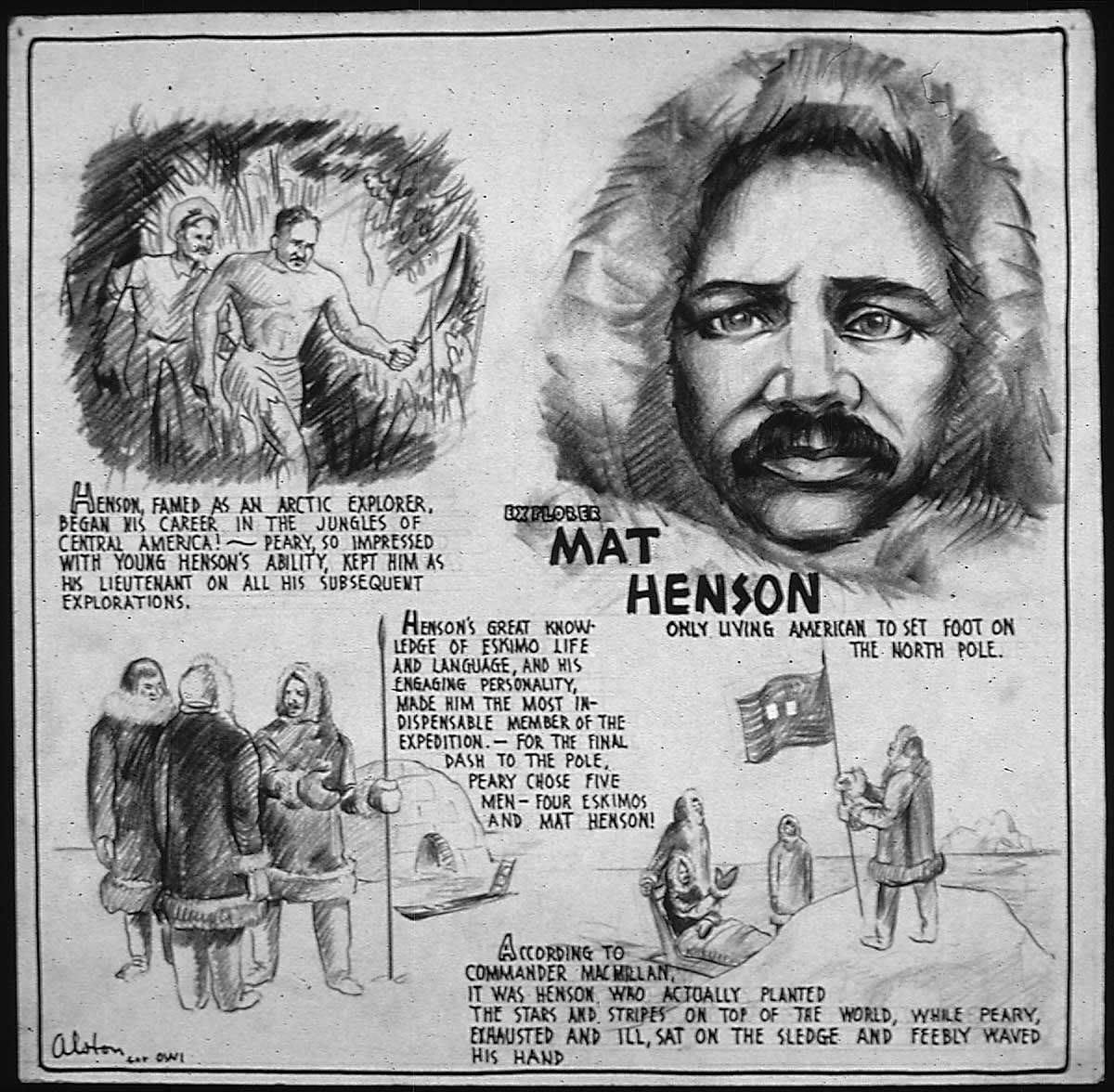
Maryland-born explorer Matthew Henson accompanied Robert Peary on seven Arctic expeditions and was with him on the April 1909 push they claimed reached the North Pole; that claim is now doubted.
Stub: research pending

Nabta Playa
Neolithic; the stone alignments were dated in 1998 to about 6,000 to 6,500 years ago
Western (Nubian) Desert, southern Egypt, west of Abu Simbel
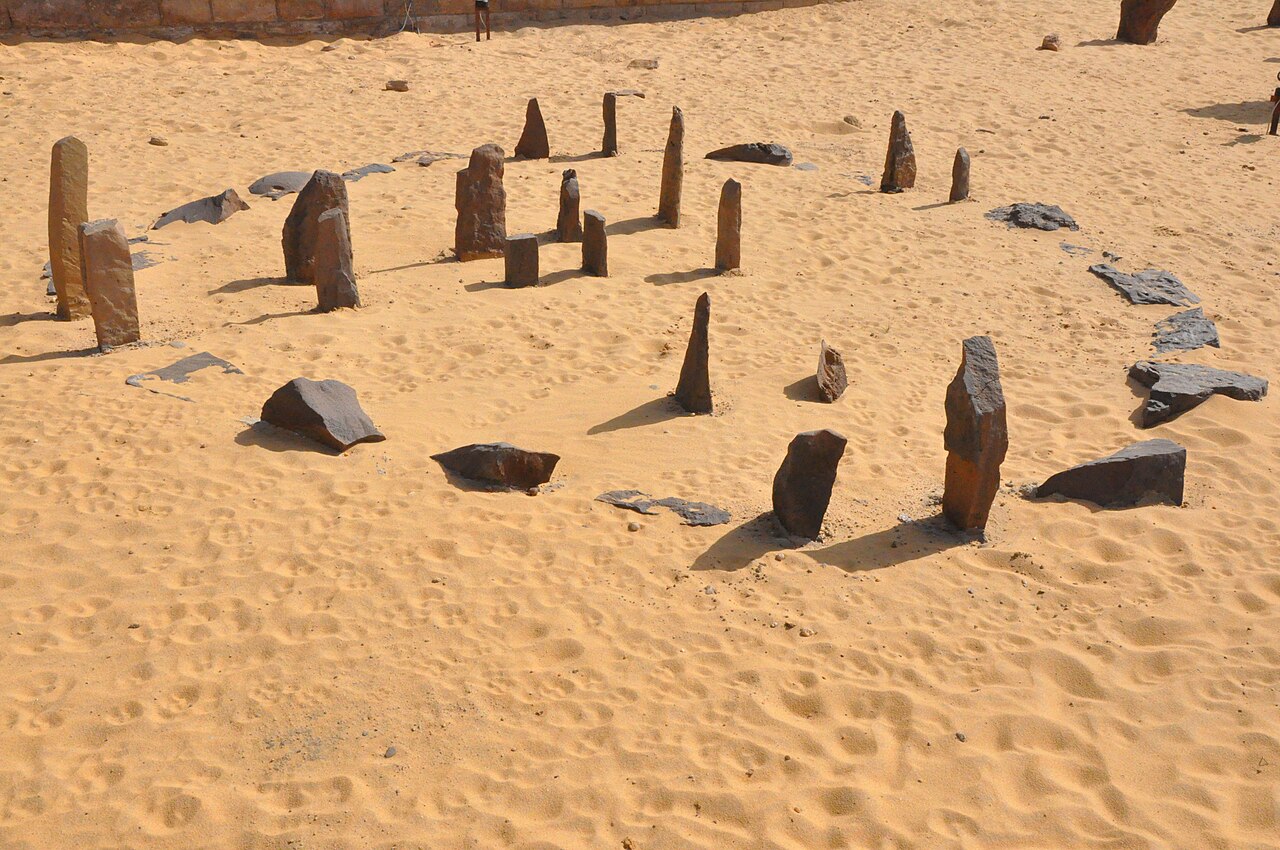
In the Egyptian Sahara, Neolithic herders raised stone alignments and a small stone circle facing north and the midsummer sunrise, among the earliest known astronomical monuments anywhere.

Namoratunga
Dated by its excavators to about 300 BCE; the date is disputed
West of Lake Turkana, northwestern Kenya
A setting of 19 basalt pillars west of Lake Turkana, proposed in 1978 as an observatory for the stars of the Borana calendar. Later studies questioned both the star alignments and the date.

Norbert Rillieux
1806 – 1894
New Orleans, Louisiana, United States and Paris, France
New Orleans-born engineer, educated in Paris, whose multiple-effect vacuum evaporator, patented from 1843, reused steam heat to boil cane juice, cutting fuel costs and replacing a dangerous open-kettle process.
Stub: research pending

Patricia Bath
1942 – 2019
New York (Harlem) and Los Angeles, California, United States
Harlem-born ophthalmologist who founded the field of community ophthalmology, co-founded the American Institute for the Prevention of Blindness, and in 1988 became the first Black woman physician to receive a U.S. patent for a medical device, the Laserphaco Probe for cataract removal.

Percy Julian
1899 – 1975
Alabama, Indiana and Illinois, United States
Chemist who, with Josef Pikl, synthesized the glaucoma drug physostigmine in 1935, then at Glidden turned soybeans into industrial products and inexpensive steroid hormones, including progesterone and a key cortisone precursor; he held more than 130 patents.

Pyramid alignment to north
Old Kingdom, 4th Dynasty (about the 26th century BCE)
Giza and Dahshur, Nile Valley (Kemet)
The great pyramids of the Old Kingdom face the cardinal points with errors of a fraction of a degree. That precision is documented; how the builders found north, by the stars or by the sun, is still debated.

Sirius and the Kemetic calendar
Civil calendar in use from the early dynasties to Roman times
Nile Valley (Kemet)
Kemet ran its civil year on 365 days and watched for the dawn return of Sirius, the star goddess Sopdet, to herald the flood season. Using recorded Sirius dates to fix the reigns of the pharaohs is still debated.

Timbuktu astronomy manuscripts
Islamic-era West Africa; surviving copies include one dated 1733
Timbuktu and the Niger Bend, Mali
Timbuktu's family libraries hold handwritten books on the stars, used to train scholars to fix the seasons, the hours of prayer and the direction of Mecca, and studied today by African astronomers.

Wangari Maathai
1940 – 2011
East Africa (Kenya)
Kenyan biologist and the first woman in East and Central Africa to earn a doctorate (1971). She founded the Green Belt Movement, a tree-planting campaign, and won the 2004 Nobel Peace Prize.
Stub: research pending