Marie Laveau
c. 1801 – 1881
New Orleans, Louisiana
Marie Laveau was a free Louisiana Creole woman of colour in New Orleans who became the best-known practitioner of New Orleans Voodoo, remembered as its "Voodoo Queen". Sources describe her as a healer, herbalist and adviser whom people consulted about health, family and money. Most give her birth as 1801 (a few say 1794) and her death as 1881. Much of her popular image is legend, and accounts often blur her with her daughter of the same name.
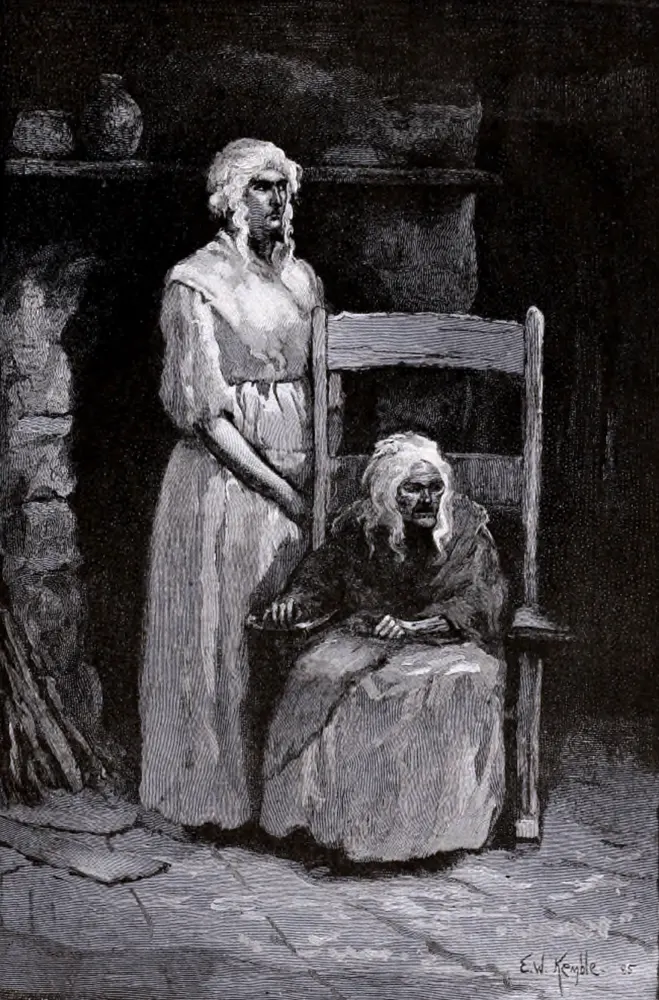
A free woman of colour in New Orleans
Marie Laveau was born in New Orleans to parents who were free people of colour. The New Orleans Historical project gives her birth date as September 10, 1801; some historians place it closer to 1794. She was baptized at St. Louis Cathedral, the Catholic cathedral at the heart of the city, and she would later marry there and have her own children baptized there too.
On August 4, 1819, she married Jacques Paris, a free carpenter of colour from Saint-Domingue (today's Haiti). Paris later disappeared from the records and was reported to have died. Laveau supported herself and her children by working as a hairdresser. From around the 1820s she lived as the partner of Christophe Glapion (his name appears in several forms, including Louis Christophe Duminy de Glapion).
Voodoo practice
Laveau became the best-known figure of New Orleans Voodoo, an African-rooted spiritual tradition of the city, and she is remembered as its "Voodoo Queen". Sources describe her as a healer, herbalist and spiritual adviser whom people of every background consulted about health, family and money. Accounts place the ceremonies she led at her home, at Congo Square and on the shores of Lake Pontchartrain.
Laveau also remained a practising Catholic. An 1871 newspaper article described her as a devout member of the Catholic Church, and her daughter Philomène later told a reporter about the Catholic devotions of the household. For Laveau, as for many in New Orleans, Catholic and African-rooted practice existed side by side.
Care for prisoners
Several sources record that Laveau visited prisoners in the city's jail, especially those sentenced to death. According to these accounts, she attended to them and sought pardons or lighter sentences for some of them.
Death
Marie Laveau died at her home in New Orleans on Wednesday, June 15, 1881. The city's newspapers reported her death within a day or two; sources differ on whether the first notices appeared on June 16 or June 17.
She is generally believed to be buried in the Glapion family tomb in St. Louis Cemetery No. 1, which has long drawn visitors, though historians note they cannot be fully certain it is her resting place.
Legend and the historical record
Much of what is told about Marie Laveau is legend, and historians have worked to separate it from the documents. One source of confusion is that her daughter was also named Marie Laveau. From at least the 1850s, accounts describe a Marie Laveau who looked remarkably young, which has led some historians to propose that the daughter, often called Marie Laveau II, took over her mother's public role. Inconsistent spellings in old records add to the difficulty.
The historian Carolyn Morrow Long, in A New Orleans Voudou Priestess: The Legend and Reality of Marie Laveau (2006), set out to test the stories against archival evidence. She suggests, for example, that a New Orleans newspaper reporter writing in 1884, after Laveau's death, may have invented one of the figures in the later stories, a supposed successor named Malvina Latour. Readers should treat colourful stories about Laveau with care.
What the record does support is a free Black woman who earned her living, raised a family, cared for the sick and the condemned, and was widely sought out as a spiritual leader in nineteenth-century New Orleans.
Achievements
- Led New Orleans Voodoo practice from about the 1830s, with her daughter of the same name continuing into the 1880s
- Known as a healer, herbalist and adviser to people of every background
- 1881: Died at home in New Orleans; buried in St. Louis Cemetery No. 1, where her tomb still draws visitors
Related entries
Sources
- Encyclopedia.com, "Laveau, Marie" (Reference)
- SNAC (Social Networks and Archival Context), "Laveau, Marie, 1801-1881" (Reference)
- Carolyn Morrow Long, A New Orleans Voudou Priestess: The Legend and Reality of Marie Laveau (University Press of Florida, 2006) (Scholarly)
- New Orleans Historical (University of New Orleans), "The Church: Marie Laveau at St. Louis Cathedral" (Reference)
- 64 Parishes (Louisiana Endowment for the Humanities), "Marie Laveau" (Reference)
- EBSCO Research Starters, "Marie Laveau" (Reference)
Share and cite
Cite this page
“Marie Laveau.” Kemet to Now, https://kemettonow.com/entry/marie-laveau.
Suggest a correction: opens once the database is connected.