Léopold Sédar Senghor
1906 – 2001
Senegal; France
Senegalese poet who, with Aimé Césaire, helped shape Négritude, and who led Senegal as its first president for twenty years after independence; he was also the first African elected to the Académie française.
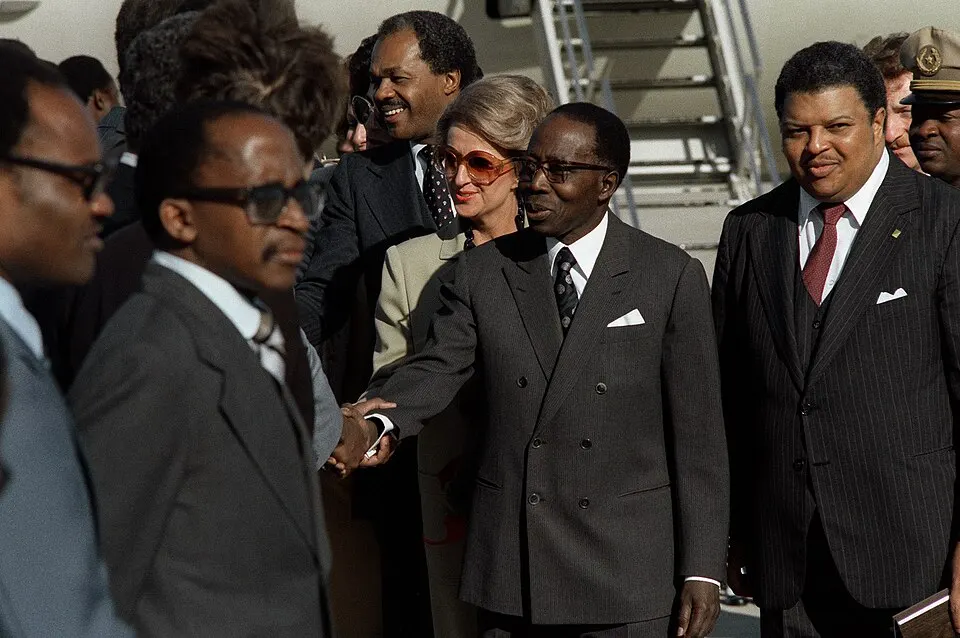
Early life in Joal
Léopold Sédar Senghor was born on 9 October 1906 in Joal, a coastal town in Senegal, then a French colony. His father was a well-off Catholic merchant. A strong student, he won a scholarship to study in France, and in 1928 he enrolled at the Lycée Louis-le-Grand in Paris.
Paris and Négritude
In Paris Senghor met other Black students from Africa and the Caribbean. At Louis-le-Grand he met the poet Aimé Césaire from Martinique; Césaire later described their meeting as friendship at first sight. Together with Césaire and others, he developed the idea of Négritude: a call for Black people to value their own cultures, histories and ways of seeing, against the French colonial idea that Africans should simply become French. Senghor became the movement's best-known spokesman.
He was also a brilliant student. In 1935, on his second attempt, he passed the agrégation, the most demanding teaching examination in France.
War and captivity
When the Second World War began, Senghor served in the French colonial army. In June 1940 he was captured by the invading Germans. He was held in a series of prisoner-of-war camps and finally at Front Stalag 230 in Poitiers. According to the Smithsonian Libraries, he left a detailed account of his captivity there. He was released in 1942 and joined the French Resistance. Many of the poems he wrote in these years appeared in his first collection.
Poet
That first collection, Chants d'ombre ("Songs of Shadow"), was published in 1945. It includes some of his best-known poems, such as "Femme noire" ("Black Woman") and "Joal," named for his birthplace. In 1948 he edited the Anthologie de la nouvelle poésie nègre et malgache de langue française, an anthology of new Black and Malagasy poetry in French that brought writers of Négritude to a wide audience. He went on to publish many more books of poems over his long life.
President of Senegal
Senghor also built a career in politics. Encouraged by the Senegalese socialist leader Lamine Guèye, he was elected a deputy for Senegal in the French National Assembly. When Senegal became independent in 1960, he became its first president. He held the office for twenty years and resigned in 1980.
The Académie française and death
In 1983 Senghor was elected to the Académie française, the body that guards the French language; he was the first Black member in its history. He was received into it the following year. He spent his last years in France and died in Verson, Normandy, on 20 December 2001.
Legacy
Senghor's life joined two roles that rarely meet: he was a major poet and a head of state. His ideas about Négritude were debated in his own time. Critics such as Frantz Fanon and the Nigerian writer Wole Soyinka objected that Négritude rested too much on fixed ideas about race, while its defenders saw it as a vital step in Black self-respect. Both views are part of his story.
Achievements
- 1935: Passed the agrégation, France's highest teaching examination
- 1940 – 1942: Held as a prisoner of war by the Germans
- 1945: Published his first poetry collection, Chants d'ombre
- 1948: Edited the Anthologie de la nouvelle poésie nègre et malgache de langue française
- 1960 – 1980: First president of independent Senegal
- 1983: Elected the first Black member of the Académie française
Related entries
Sources
- Poetry Foundation, "Léopold Sédar Senghor" (Reference)
- Académie française, "Léopold Sédar Senghor" (Primary source)
- South African History Online, "Léopold Sédar Senghor resigns after twenty years as Senegalese president" (Reference)
- BlackPast, "Léopold Sédar Senghor (1906-2001)" (Reference)
- Stanford Encyclopedia of Philosophy, "Négritude" (Scholarly)
- Smithsonian Libraries and Archives blog, "Concealed Reality: Léopold Sédar Senghor's Years of Captivity" (2017) (Reference)
Share and cite
Cite this page
“Léopold Sédar Senghor.” Kemet to Now, https://kemettonow.com/entry/leopold-sedar-senghor.
Spotted an error or have a better source? Suggest a correction.