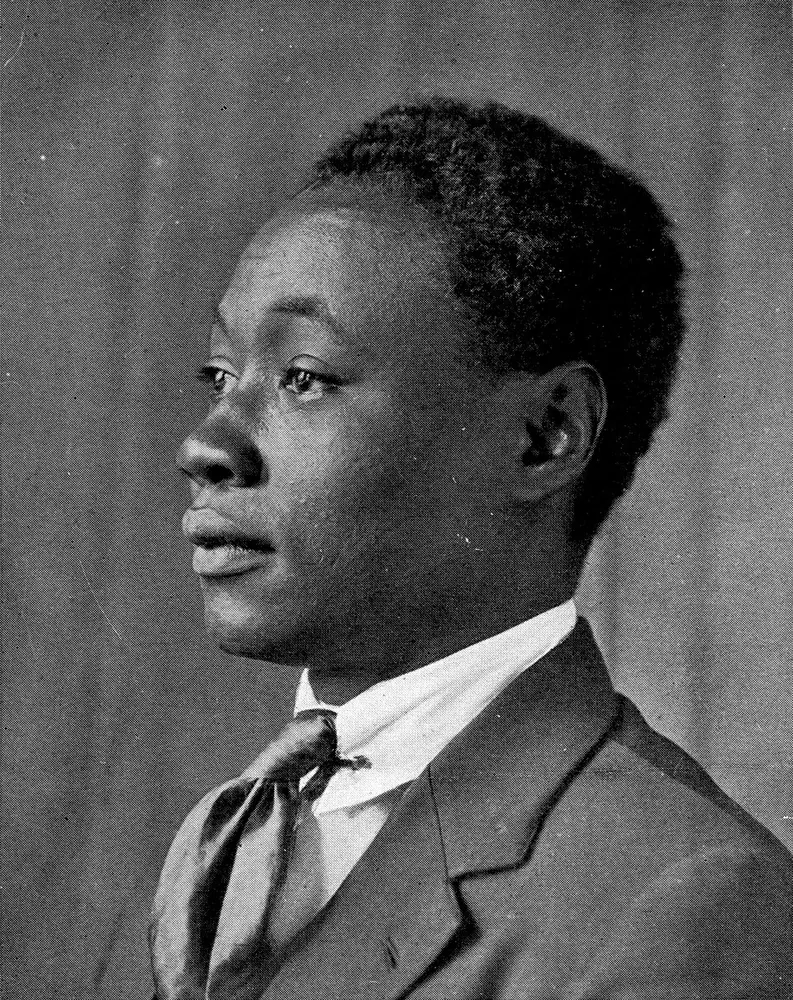
James Weldon Johnson
1871 – 1938
Jacksonville, Florida; New York City
James Weldon Johnson of Jacksonville, Florida, wrote the words of "Lift Every Voice and Sing" in 1900, set to music by his brother J. Rosamond Johnson; it became known as the Black national anthem. A poet, novelist and diplomat, he published The Autobiography of an Ex-Colored Man in 1912 and in 1920 became the first Black executive secretary of the NAACP, leading it through the 1920s. He died in 1938.
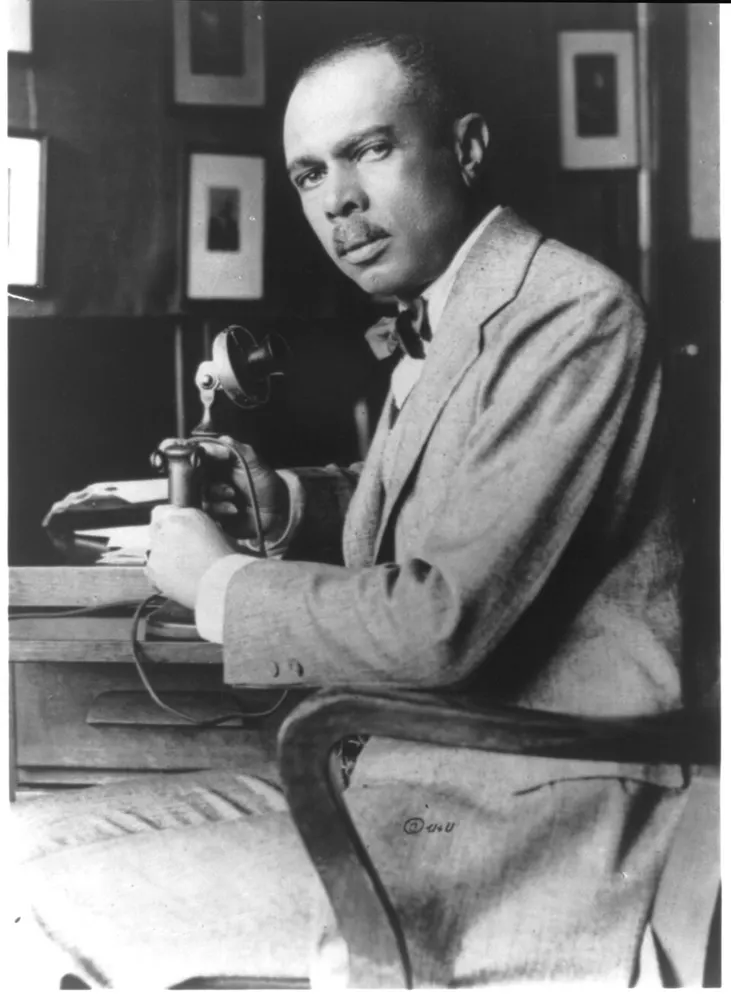
Jacksonville beginnings
James Weldon Johnson was born in Jacksonville, Florida, in 1871. He studied at Atlanta University, where he earned his degrees, and then returned home to become principal of the Stanton School, Jacksonville's school for Black children. While working in education he also studied law and was admitted to the Florida bar in 1897 (BlackPast gives 1898), though BlackPast notes that he did not practise law.
"Lift Every Voice and Sing"
Johnson wrote the words of "Lift Every Voice and Sing," and his brother, J. Rosamond Johnson, set them to music. The song was first performed in public on February 12, 1900, at a celebration of Abraham Lincoln's birthday, sung by a choir of 500 children at the segregated Stanton School. Some accounts link the occasion to a visit by Booker T. Washington, but a hymnology archive points out that Johnson's own account does not support this. Over the following decades it came to be known as the Black national anthem.
Broadway and diplomacy
The Johnson brothers also became songwriters for the Broadway stage. In 1906 President Theodore Roosevelt appointed James Weldon Johnson United States consul at Puerto Cabello, Venezuela. In 1909 he became consul at Corinto, Nicaragua, where he served until 1914.
While he was a diplomat he wrote a novel, The Autobiography of an Ex-Colored Man, published without his name in 1912. The book drew little notice at first, but it found a wide readership when it was reissued under Johnson's name more than a decade later. Because many readers took it for a true story, Johnson later wrote his real autobiography, Along This Way (1933).
Leading the NAACP
Johnson joined the staff of the National Association for the Advancement of Colored People (NAACP) in 1915. In 1917 he helped organize the Silent Protest Parade in Manhattan (often called the Silent March), a protest against lynching. In 1920 he became the association's first Black executive secretary, and he led it through the 1920s.
The fight against lynching was at the centre of his work. From 1919 he lobbied Congress for a federal law, and in 1921 Representative Leonidas Dyer introduced an anti-lynching bill. The House passed it on January 10, 1922, by 230 votes to 119, but Southern Democrats in the Senate killed it with a filibuster. Johnson later reflected that, even though it never became law, the bill turned Congress into a forum where the facts about lynching were brought home to the American people as never before.
Writer of the Harlem Renaissance
Johnson was also one of the leading literary figures of the Harlem Renaissance. In 1922 he edited The Book of American Negro Poetry, which Emory University describes as the first anthology of African American poetry in English; it remained a standard text for decades. In 1927 he published God's Trombones: Seven Negro Sermons in Verse, poems that capture the speaking style of the Black folk preacher in standard English rather than dialect. In 1930 he published Black Manhattan, a history of Black life and culture in New York.
Fisk and final years
Johnson left the NAACP in 1930 to teach creative writing and literature at Fisk University in Nashville. In June 1938, while on summer holiday in Maine, he was killed when a train struck the car he was riding in at a rail crossing in Wiscasset. He was 67 years old.
Achievements
- 1900: Wrote "Lift Every Voice and Sing" with his brother J. Rosamond Johnson
- 1912: Published The Autobiography of an Ex-Colored Man
- 1920: Became the NAACP's first Black executive secretary
- 1922: Edited The Book of American Negro Poetry
- 1927: Published God's Trombones: Seven Negro Sermons in Verse
Related entries
Sources
- NAACP, "NAACP History: James Weldon Johnson" (Reference)
- Yale University Library, online exhibit "Lift Ev'ry Voice and Sing" (Primary source)
- United Methodist Discipleship Ministries, "History of Hymns: Lift Every Voice and Sing" (Reference)
- Emory University, James Weldon Johnson Institute, "About James Weldon Johnson" (Reference)
- Poetry Foundation, "James Weldon Johnson" (Reference)
- BlackPast, "James Weldon Johnson (1871-1938)" (Reference)
- Florida Department of State, Florida Artists Hall of Fame, "James Weldon Johnson" (Reference)
- Teaching American History (Ashland University), "The Fight for a Federal Anti-Lynching Law" (Reference)
Share and cite
Cite this page
“James Weldon Johnson.” Kemet to Now, https://kemettonow.com/entry/james-weldon-johnson.
Suggest a correction: opens once the database is connected.