Claude McKay
1889 or 1890 – 1948
Jamaica and Harlem, New York
Claude McKay was a Jamaican-born poet and novelist who became a leading voice of the Harlem Renaissance. He wrote "If We Must Die" in 1919 after a wave of racist violence, and his 1928 novel Home to Harlem became a best-seller. Sources give his birth year as 1889 or 1890.
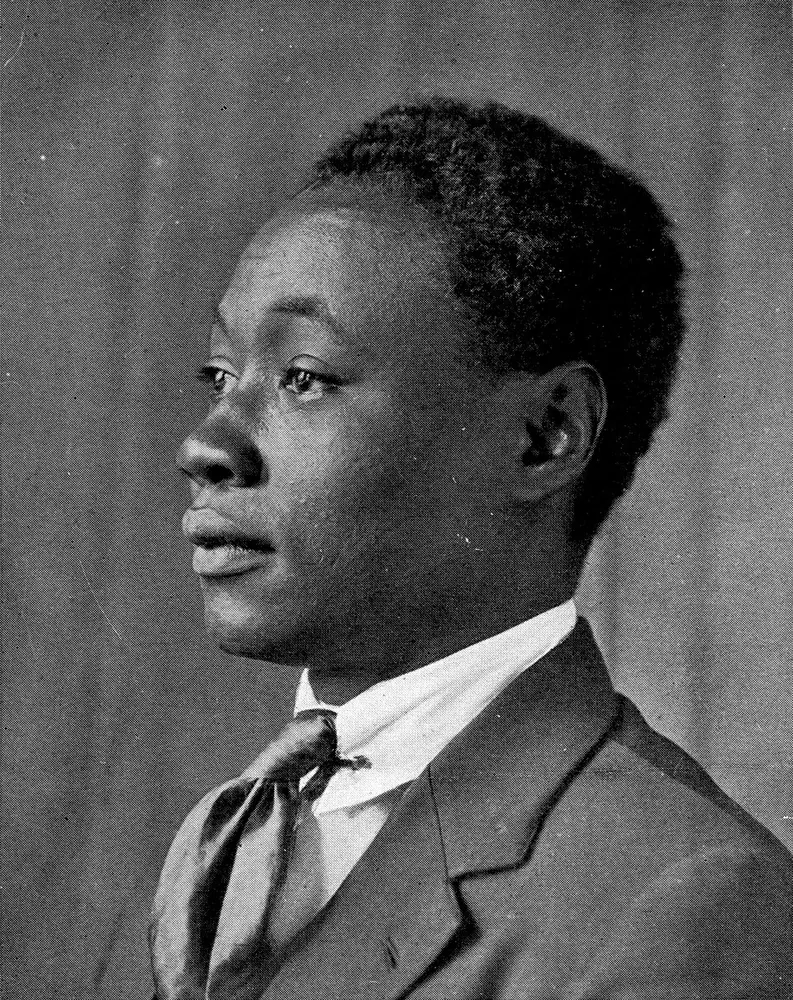
A young poet in Jamaica
Claude McKay was born in Clarendon Parish, in the hills of central Jamaica. His birth certificate gives the year 1889, though many sources say 1890.
As a young man he found a mentor in Walter Jekyll, a British folklorist living in Jamaica, who advised him to write verse in Jamaican speech and helped him publish it. In 1912 McKay brought out two books of poems, Songs of Jamaica and Constab Ballads.
Coming to the United States
Also in 1912 McKay travelled to the United States to study. He enrolled at Tuskegee Institute in Alabama but left after a few months, and then studied agriculture at Kansas State College from 1912 to 1914 without taking a degree.
"If We Must Die"
In 1919 the United States saw a wave of racist attacks on Black communities. In response McKay wrote the sonnet "If We Must Die", which appeared in the magazine the Liberator in July of that year.
In 1922 he published Harlem Shadows, a collection of his poems.
Travels abroad
McKay then spent about eleven years in Europe and North Africa. His time in the Soviet Union was the subject of an essay he published in The Crisis in December 1923. He was later disillusioned with communism.
Abroad he turned to fiction. His novel Home to Harlem (1928) follows Jake, a Black soldier who walks away from the army and returns home to Harlem. It became a best-seller. Its sequel, Banjo (1929), follows the character Ray among sailors and drifters in Marseille, but it sold poorly.
Last years
Back in the United States, McKay fell into poverty until his friend, the editor Max Eastman, helped him, and he joined the Federal Writers' Project. In 1937 he published his autobiography, A Long Way from Home. In September 1946 he moved to Chicago, where he stayed until his death in May 1948.
He is remembered as one of the leading voices of the Harlem Renaissance whose work moved between Jamaica, Harlem, Europe and North Africa.
Achievements
- 1912: Published Songs of Jamaica and Constab Ballads, poems in Jamaican speech
- 1912 – 1914: Studied at Tuskegee Institute and Kansas State College
- July 1919: "If We Must Die" published in the Liberator
- 1922: Published the collection Harlem Shadows
- 1928: Published the novel Home to Harlem, a best-seller
- 1929: Published the novel Banjo
- 1937: Published his autobiography, A Long Way from Home
Related entries
Sources
- Poetry Foundation, "Claude McKay" (Reference)
- Kennedy Center, "Claude McKay: Poet, Novelist" (Reference)
- Lehigh University, "Claude McKay's Early Poetry (1911-1922): A Digital Collection" (Scholarly)
- Poets.org (Academy of American Poets), "Claude McKay" (Reference)
- BlackPast, "Claude McKay (1889-1948)" (Reference)
- University of Toronto Libraries, Representative Poetry Online, "McKay, Claude" (Scholarly)
Share and cite
Cite this page
“Claude McKay.” Kemet to Now, https://kemettonow.com/entry/claude-mckay.
Suggest a correction: opens once the database is connected.