Arturo Schomburg
1874 – 1938
Harlem, New York; Puerto Rico
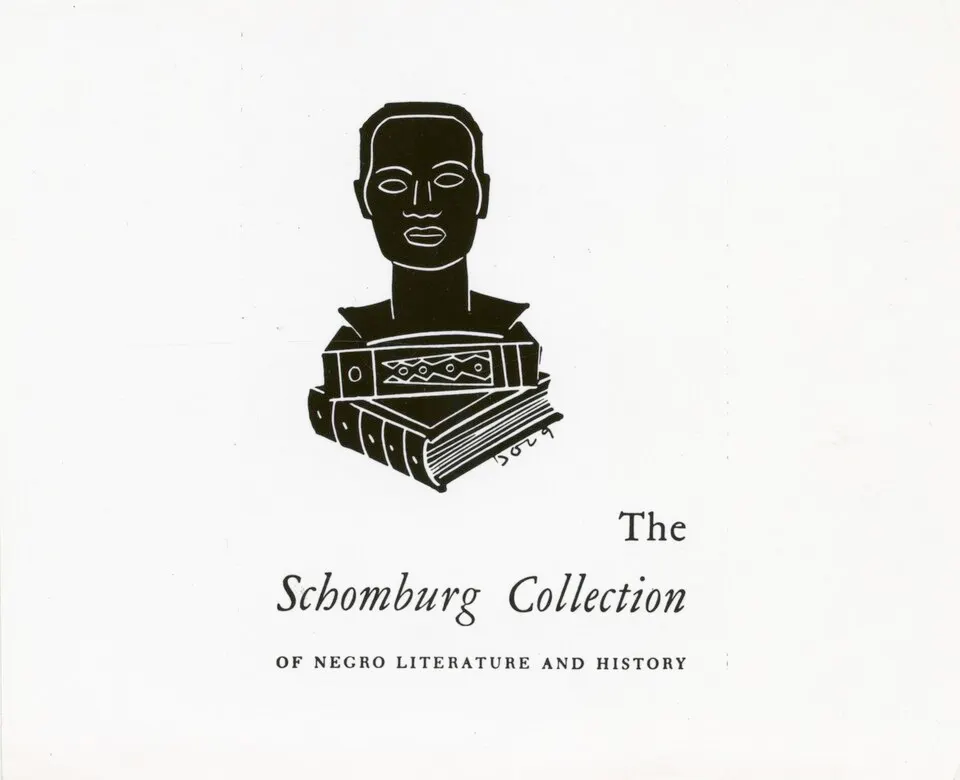
Puerto Rico-born collector and scholar who spent decades gathering books, manuscripts and art on peoples of African descent; the New York Public Library acquired his collection in 1926, laying the base of the Schomburg Center in Harlem.
A question in a Puerto Rican classroom
Arturo Alfonso Schomburg was born in San Juan, Puerto Rico, on January 24, 1874, and was raised largely by his mother's family. A story he told about his school days became the key to his life's work. According to accounts of his life, a grade-school teacher told the class that Black people had no history, no heroes and no achievements. Schomburg set out to prove the teacher wrong, and he spent the rest of his life finding the evidence.
New York and the cause of the Antilles
In 1891 Schomburg moved to New York City, where he lived in Harlem and later in Brooklyn. He threw himself into the movement for the independence of Cuba and Puerto Rico from Spain. In 1892 he helped start Las Dos Antillas, a political club working for the freedom of both islands. The same year he became a Freemason, joining El Sol de Cuba Lodge No. 38, a Spanish-speaking lodge in New York.
The collector
Alongside his working life, Schomburg built one of the great private collections on the history of people of African descent. Over several decades he gathered books, manuscripts and works of art on peoples of African descent, building the evidence that his old teacher had said did not exist.
In 1911 he co-founded the Negro Society for Historical Research, a group that brought African, Afro-Caribbean and African American scholars together to study and share that history. He also wrote for many of the leading Black periodicals of his time, including The Crisis, Opportunity, Negro World and the New York Amsterdam News.
"The Negro Digs Up His Past"
In March 1925 Schomburg published his best-known essay, "The Negro Digs Up His Past," in a special issue of the magazine Survey Graphic devoted to the life and thought of Harlem. Alain Locke reprinted it later that year in The New Negro, the landmark anthology of the Harlem Renaissance.
The collection goes to Harlem
In 1925 the New York Public Library opened a Division of Negro Literature, History and Prints at its 135th Street branch in Harlem, and Schomburg helped bring it about. In 1926 the library acquired his collection with a $10,000 grant from the Carnegie Corporation. It became the foundation of the library's research collection on Black history and culture.
From 1931 to 1932 Schomburg served as curator of the library at Fisk University in Nashville. He then returned to New York to become curator of his own collection at the 135th Street library, a post he held until his death.
Death and legacy
Schomburg died in New York in June 1938; sources give the date as June 8 or June 10. In 1972 the library's Harlem research branch was renamed the Schomburg Center for Research in Black Culture in his honour. The center carries forward the work he began in answer to a teacher's dismissal.
Achievements
- 1911: co-founded the Negro Society for Historical Research
- 1925: published the essay "The Negro Digs Up His Past"
- 1926: his collection was acquired by the New York Public Library with a $10,000 Carnegie Corporation grant (NYPL timeline)
- 1972: the library's Harlem research branch was renamed the Schomburg Center for Research in Black Culture (NYPL timeline)
Related entries
Sources
- New York Public Library, "Arturo A. Schomburg: His Life and Legacy" (Reference)
- New York Public Library, "The Schomburg Center Through the Years" (Reference)
- American Historical Association (Perspectives on History), "Arturo Alfonso Schomburg (1874–1938): Archivist and Promoter of History" (Scholarly)
- New York Public Library, "Arturo (Arthur) Schomburg Research Guide" (Reference)
- JSTOR Daily / JSTOR, "A. A. Schomburg: Collector of Lost Histories" (Reference)
- Lehigh University, African American Poetry: A Digital Anthology, "Arturo Schomburg, The Negro Digs Up His Past (1925)" (Primary source)
Share and cite
Cite this page
“Arturo Schomburg.” Kemet to Now, https://kemettonow.com/entry/arturo-schomburg.
Suggest a correction: opens once the database is connected.