Alain Locke
1885 – 1954
Philadelphia; Howard University, Washington, D.C.
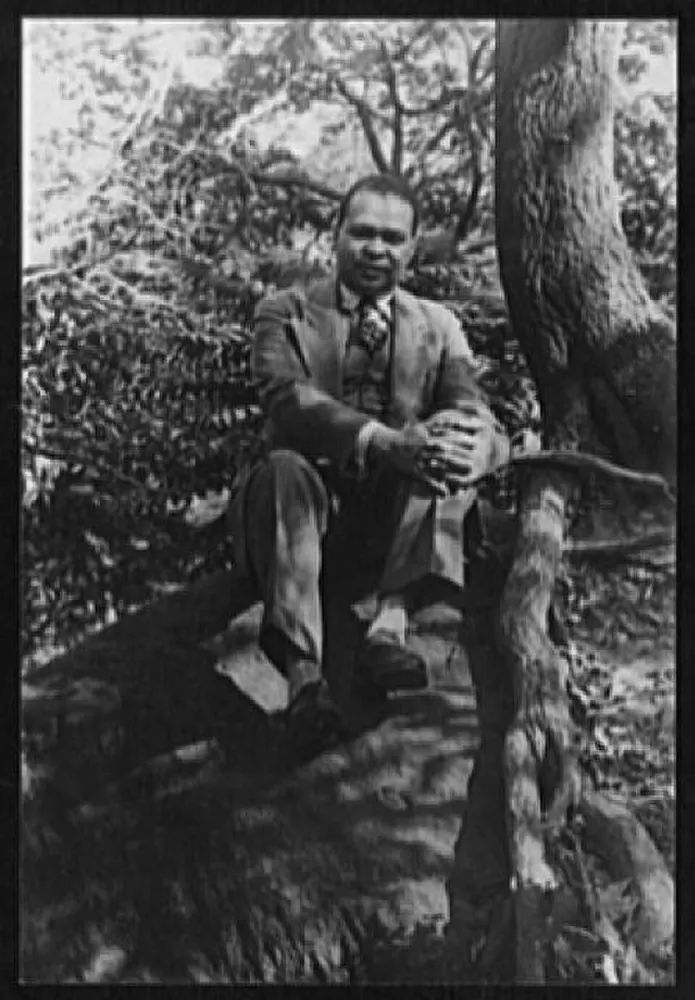
Alain Locke was a philosopher and critic who in 1907 became the first African American Rhodes Scholar, then taught at Howard University for about four decades. His 1925 anthology The New Negro gathered the writers and artists of the Harlem Renaissance, and he is often called its dean.
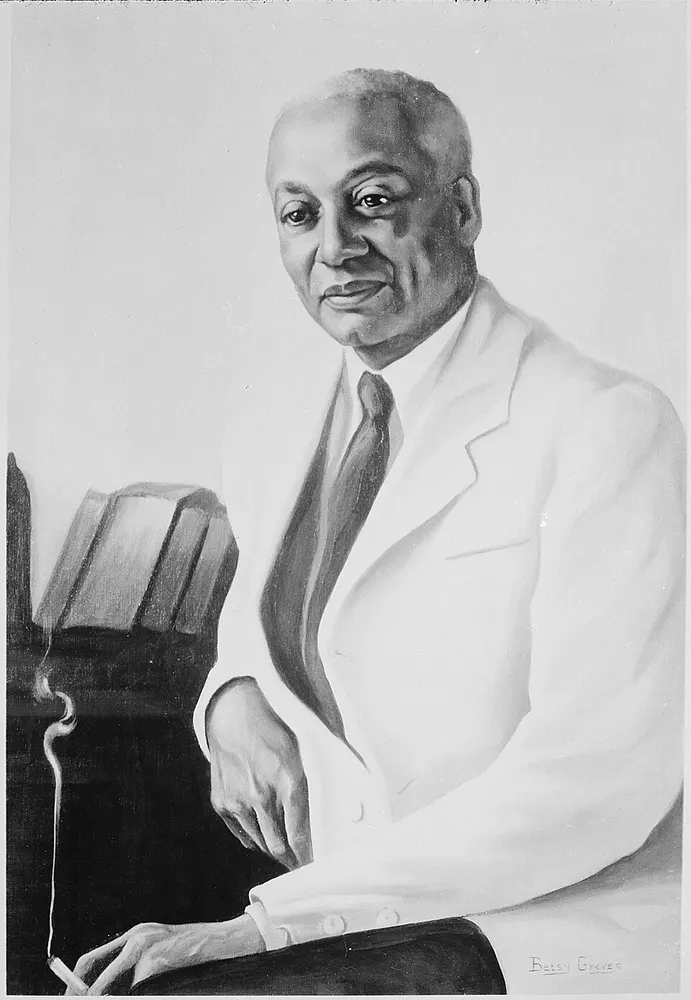
Early life and education
Alain LeRoy Locke was born in Philadelphia on 13 September 1885; a few sources give 1886. His mother, Mary Hawkins Locke, was a schoolteacher. He studied at Harvard University, where he took his degree in 1907.
That same year Locke was chosen as the first African American Rhodes Scholar, a scholarship to study at the University of Oxford. He studied at Hertford College, Oxford, from 1907 (sources give an end date of 1909 or 1910) and then at the University of Berlin in 1910 and 1911.
Howard University
In 1912 Locke joined the faculty of Howard University in Washington, D.C., where he taught for almost forty years. He returned to Harvard to complete a PhD in philosophy in 1918. At Howard he built up the study of philosophy and became head of the department.
His time there was not without conflict. The Stanford Encyclopedia of Philosophy records that Howard dismissed him in 1925 after he pressed for equal pay for Black and white faculty. He was brought back in 1928 and taught until he retired in 1953.
The New Negro
Locke is best known as the guide and interpreter of the Harlem Renaissance. In March 1925 he edited a special issue of the magazine Survey Graphic on Harlem. Later that year he expanded it into a book, "The New Negro: An Interpretation", an anthology of fiction, poetry, drama, essays and art by Black writers and artists.
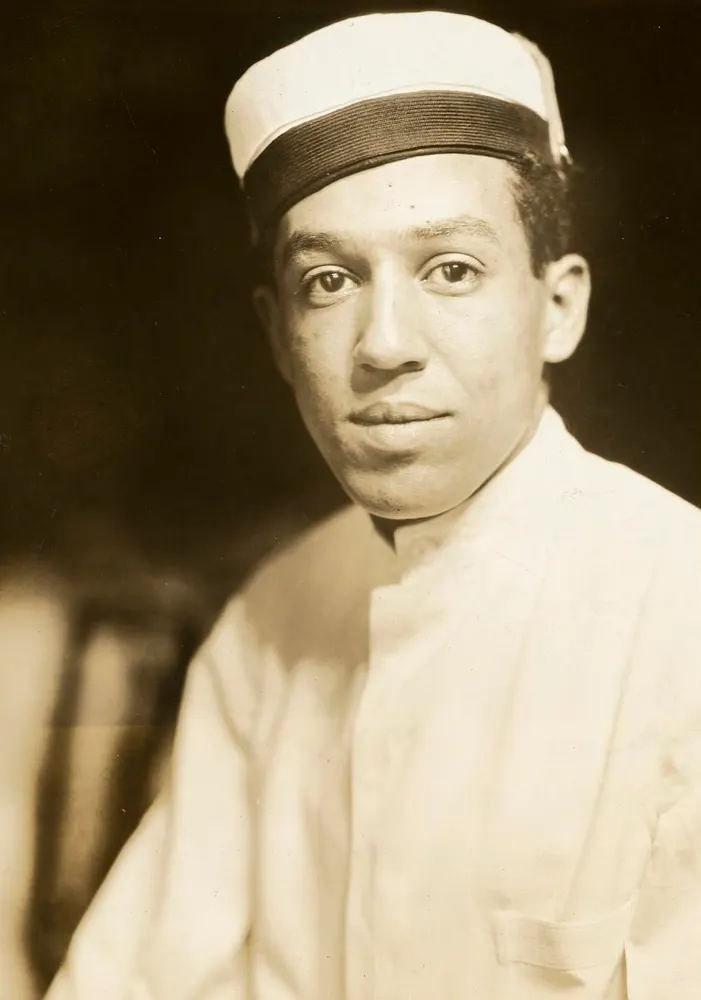
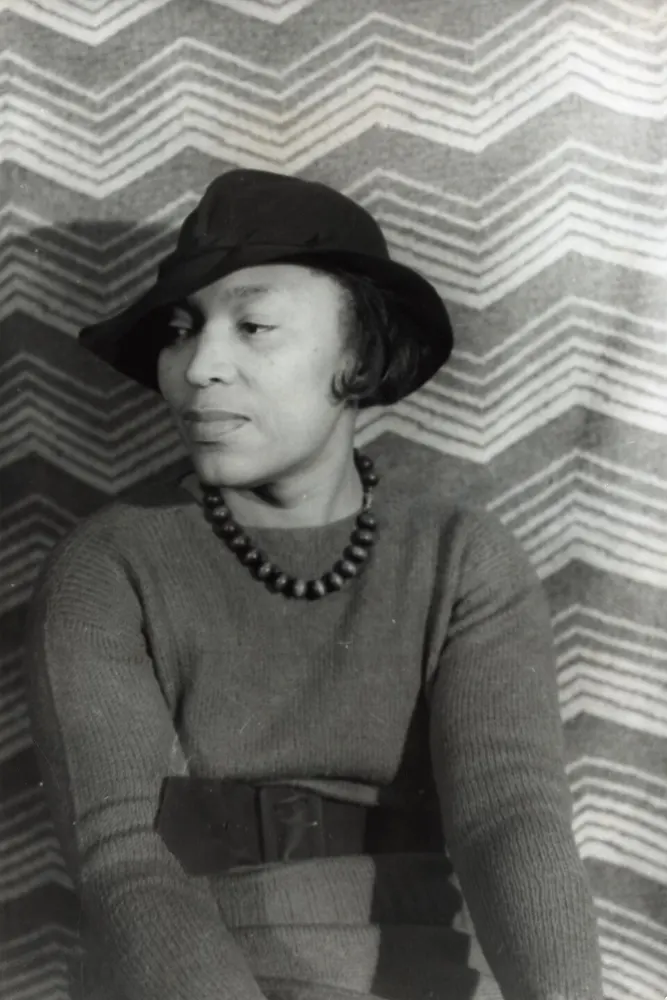
The book introduced a wide readership to writers such as Langston Hughes, Zora Neale Hurston and Countee Cullen, and it presented a new generation of Black Americans creating their own art and ideas. For this work he is often called the "dean" of the Harlem Renaissance. Howard University marked the book's hundredth anniversary in 2025.
Philosopher
Locke was also a serious philosopher. The Stanford Encyclopedia of Philosophy describes his work on values and on cultural pluralism: the idea that different cultures each have their own worth and that a democracy can be built on respect among them.
Private life and death
Locke was a gay man at a time when he could not live openly. The historian Jeffrey C. Stewart's biography "The New Negro: The Life of Alain Locke" (2018), discussed by Harvard's Alain Locke Gallery, explores this part of his life as well as his public work. Locke died in New York City on 9 June 1954.
Legacy
Locke helped give the Harlem Renaissance its name and its sense of purpose, and he opened doors for a generation of Black writers and artists. His ideas about culture, value and democracy are still studied, and his anthology remains one of the key books of Black American literature.
Achievements
- 1907: Graduated from Harvard and became the first African American Rhodes Scholar, studying at Hertford College, Oxford
- 1912: Joined the faculty of Howard University, where he built one of the first philosophy departments at a historically Black college
- 1918: Earned a PhD in philosophy at Harvard
- 1925: Edited The New Negro: An Interpretation, the defining anthology of the Harlem Renaissance
Related entries
Sources
- Smithsonian National Museum of African American History and Culture, "Alain Locke" (Reference)
- Harvard University, Alain Locke Gallery, "Alain Locke" (Scholarly)
- University of Virginia, Black Leadership in America, "Locke, Alain (1885–1954)" (Scholarly)
- Stanford Encyclopedia of Philosophy, "Alain LeRoy Locke" (Scholarly)
- Howard University, The Dig, "Reimagining 'The New Negro' One Hundred Years Later" (Reference)
Share and cite
Cite this page
“Alain Locke.” Kemet to Now, https://kemettonow.com/entry/alain-locke.
Suggest a correction: opens once the database is connected.