William Wadé Harris
c. 1860 – 1929
Cape Palmas, Liberia; Ivory Coast
William Wadé Harris was a Grebo prophet-evangelist from Liberia. Around 1913 he began preaching in the Ivory Coast, where his reputation as a healer drew a very large following, until French authorities expelled him. The Harrist Church grew from his work.
Early life
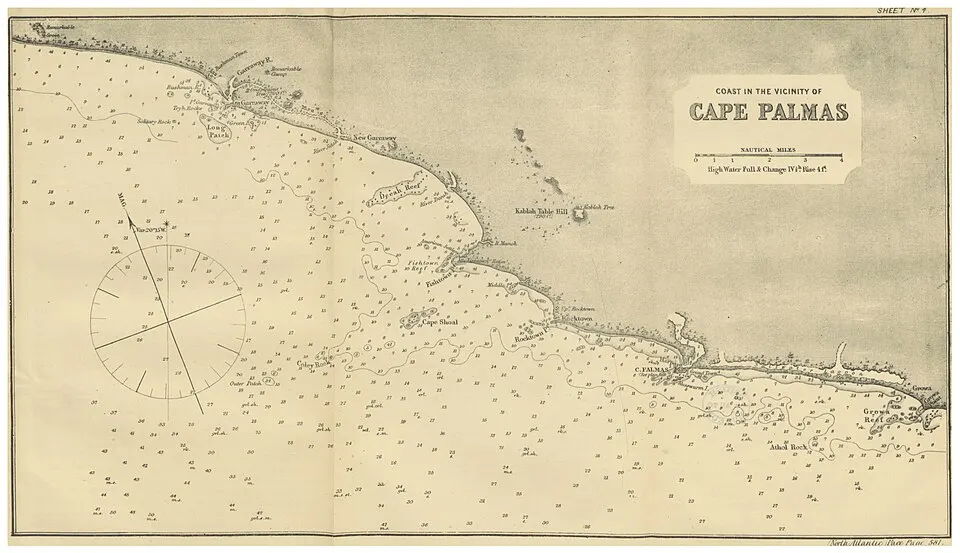
William Wadé Harris was born near Cape Palmas, in the southeast of present-day Liberia, around 1860; some sources say 1850 or 1865. He was Grebo, one of the peoples of the Liberian coast. As a young man he worked on ships trading along the West African coast. He later returned home, became a Christian, and worked for the Methodist and then the Episcopal mission as a teacher and catechist. The Dictionary of African Christian Biography notes that he moved between the two churches over his life.
Prison and a vision
Harris was caught up in the conflict between Grebo communities and the Liberian government, which was led by Americo-Liberians, the descendants of Black settlers from the United States. He was imprisoned around 1910 during a Grebo uprising. Harris later said that while he was in prison the angel Gabriel came to him in a vision and called him to be a prophet and to preach.
The mission of 1913 and 1914
In 1913 Harris walked east from Liberia into the French colony of Ivory Coast (Côte d'Ivoire). He wore a long white robe and a white turban and carried a tall staff in the shape of a cross, and a Bible. He preached that people should turn to the one God, give up the ritual objects of their older religions, and be baptised. He baptised people in great numbers. His reputation as a healer drew crowds wherever he went.
He also travelled into the western Gold Coast (now Ghana) before returning to the Ivory Coast. Observers at the time and later historians estimate that he baptised 100,000 to 120,000 people in about a year and a half. Accounts of the numbers vary, but all describe a mass movement.
Expelled by the French
The French colonial government grew alarmed at Harris's following during the First World War. In late 1914 or early 1915 they arrested him and sent him back to Liberia. Officials destroyed many of the churches his followers had built and tried to stop the movement. Harris continued to preach in Liberia but never returned to the Ivory Coast.
The Harrist Church
Many of the people Harris baptised kept their faith without him. In 1928 a delegation from the Ivory Coast travelled to Liberia to find him. Harris gave his blessing to a young member of the group, John Ahui, to continue his work. Ahui went on to lead what became the Harrist Church, which the Dictionary of African Christian Biography dates to 1931. The World Council of Churches lists the Church of Christ, Harris Mission, as a member church based in Côte d'Ivoire.
Death and legacy
Harris died in Liberia around 1929; some sources say 1928. He left almost no writings beyond a few letters. He is remembered as one of the most important African Christian leaders of the twentieth century, an African prophet who preached to Africans in their own setting, outside the control of foreign missions. His work is often studied alongside that of other African prophets, such as Simon Kimbangu in the Congo.
Achievements
- 1913: Began his preaching mission in the Ivory Coast
- 1914–1915: Expelled by the French, who destroyed his churches
- 1928: A delegation visited him in Liberia and received his blessing to continue the work
Related entries
Sources
- Dictionary of African Christian Biography, "Harris, William Wadé" (Scholarly)
- World Council of Churches, "Church of Christ - Harris Mission (Harrist Church)" (Reference)
- Christian Century, "Church of William Harris" (2013) (Reference)
- Dictionary of African Christian Biography, "Harris, William Wadé (B)" (Scholarly)
Share and cite
Cite this page
“William Wadé Harris.” Kemet to Now, https://kemettonow.com/entry/william-wade-harris.
Suggest a correction: opens once the database is connected.