Thomy Lafon
1810 – 1893
New Orleans, Louisiana
Thomy Lafon was born free in New Orleans in 1810 and began by selling cakes, then ran a store, taught school, lent money and bought property. He became one of the richest Black Americans of his time; estimates of his fortune range from about $250,000 to nearly $500,000. He gave widely to anti-slavery and charitable causes, founded an orphanage for boys and a home for elderly people, and left most of his estate to New Orleans charities when he died in 1893.
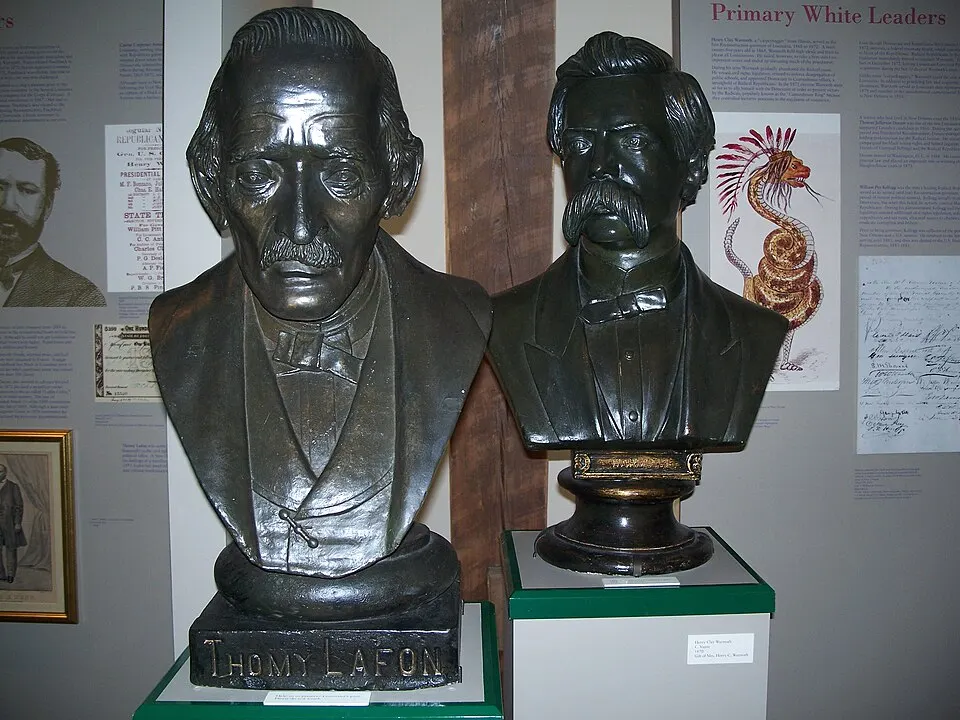
A free man of colour
Thomy Lafon was born free in New Orleans on 28 December 1810; a few sources give 1811. His family belonged to the city's community of free people of colour, who were mostly French-speaking and Catholic. Before the Civil War this community held a position between the white population and the enslaved, with some rights but many limits.
From cakes to property
Lafon's start was humble. The sources agree that he first sold cakes and sweets to workers, then opened a small store. For a time he taught school. He saved his money and began lending it, and then buying property in the city. Over several decades of careful investing in real estate he became one of the richest Black men in the United States.
How rich is not certain. One estimate puts his fortune at about $250,000 by 1870. Accounts of his estate at his death put it at nearly $500,000. Both figures are given here because the sources differ.
Giving it away
Lafon lived simply and gave much of his wealth to others. The sources say he supported the anti-slavery cause, including the American Anti-Slavery Society and the Underground Railroad. He gave to Catholic institutions for orphans and to schools that served Black students, such as Straight University in New Orleans.
He founded the Lafon Orphan Boys' Asylum and a home for elderly Black men and women.
His will
Lafon died in New Orleans in December 1893 (sources give the 22nd or 23rd). He never married. His will left most of his estate to charitable, educational and religious institutions in the city. Among them, the sources name Charity Hospital, the home for the aged that bore his name, the Sisters of the Holy Family and Straight University.
Legacy
In 1897 New Orleans opened the Thomy Lafon School, named in his honour, which CreoleGen and other sources describe as one of the first public schools in the city to offer wider education to Black children. CreoleGen notes that three different school buildings carried the name over the years. A bust of Lafon is displayed in the Cabildo museum in New Orleans. He is remembered alongside figures such as Pierre Toussaint in New York as a Black philanthropist who used private wealth for public good.
Achievements
- Built a fortune in money lending and real estate in New Orleans
- Gave to anti-slavery causes and to schools and orphanages
- Founded the Lafon Orphan Boys' Asylum and a home for elderly Black men and women
- 1893: Left most of his estate to charities, including Charity Hospital and the Sisters of the Holy Family
- 1897: The Thomy Lafon School, a public school for Black children in New Orleans, opened in his name
Related entries
Sources
- BlackPast, "Thomy Lafon (1810-1893)" (Reference)
- Philanthropy Roundtable, "Three Black Philanthropists Who Helped Fund the Fight to End Slavery" (Reference)
- Verite News, "Thomy Lafon: philanthropist, abolitionist" (2025) (Reference)
- Louisiana Digital Library, "Thomy Lafon, a black businessman, abolitionist, and philanthropist from Louisiana" (Primary source)
Share and cite
Cite this page
“Thomy Lafon.” Kemet to Now, https://kemettonow.com/entry/thomy-lafon.
Suggest a correction: opens once the database is connected.