Thomas Day
c. 1801 – c. 1861
Milton, North Carolina
Thomas Day was a free Black cabinetmaker, born in Virginia, who by the early 1850s ran the largest furniture shop in North Carolina, in the town of Milton. His clients included Governor David Reid and the University of North Carolina. His workshop also used enslaved labour, as he was himself an enslaver, and the Panic of 1857 left him in debt.
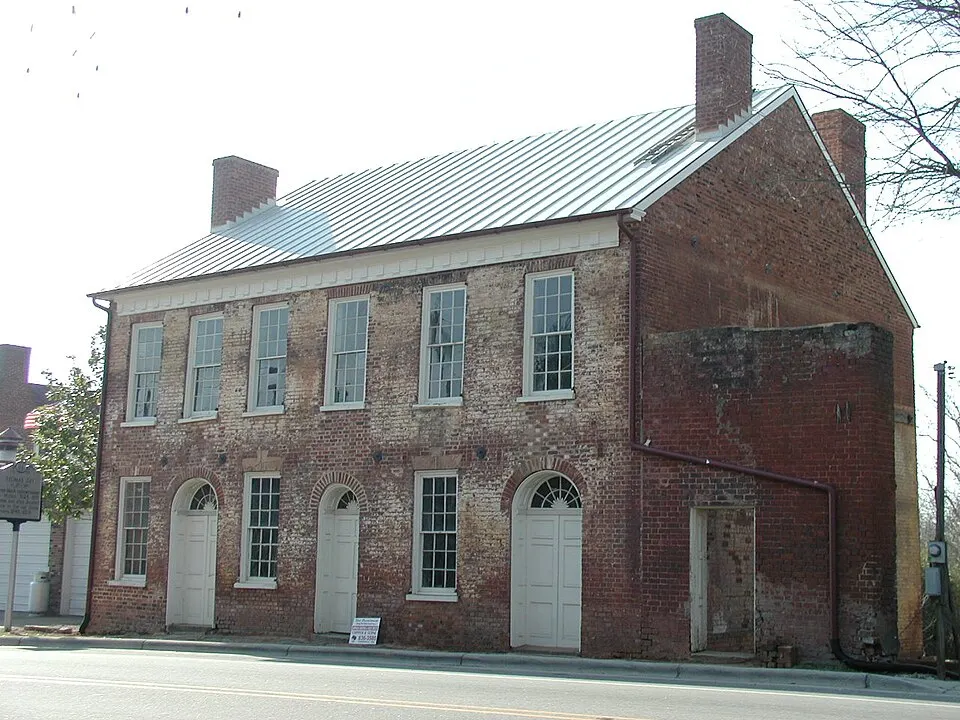
Early life
Thomas Day was born free in Virginia around 1801, the son of John and Mourning Day, both free people of colour. State sources name Dinwiddie County as his birthplace. NCpedia cautions that much of what is known about his early years comes from family tradition and oral history rather than written records.
A furniture maker in Milton
Day moved to North Carolina as a young man and settled in Milton, a busy tobacco town on the Virginia border. Sources give different dates for his arrival, ranging from about 1821 to 1827; the Smithsonian American Art Museum dates the opening of his shop to 1827. He made furniture and the woodwork for houses: staircases, mantels, door frames and newel posts. The Smithsonian notes that he is the only documented American cabinetmaker who offered clients both architectural woodwork for Greek Revival homes and furniture carved with the same classical designs.
His clients included leading white families of North Carolina and Virginia, Governor David Reid, and the University of North Carolina. Day attended Milton Presbyterian Church, and the pews there are attributed to him; one account says he made them on the condition that he could sit with the white congregation, though the North Carolina architects' dictionary treats his authorship as probable rather than certain.
The 1830 petition
In 1830 Day married Aquilla Wilson, a free woman of colour from Virginia. North Carolina had recently passed a law that barred free Black people from moving into the state (sources date it to 1826 or 1827), so his wife could not legally join him. About sixty white citizens of Milton and Caswell County petitioned the legislature on his behalf, calling him a first-rate workman, and the state attorney general supported the request. Late in 1830 the legislature passed a special act allowing Aquilla Day to live in North Carolina. It was an exception for one family, not a change in the law.
The largest shop in the state
Day's business grew through the 1830s and 1840s. In 1848 he bought the Union Tavern on Milton's main street and used it as his home and workshop. By 1850 his shop was the largest furniture business in North Carolina; one state source says it made about a sixth of the furniture produced in the state. He employed both free workers and enslaved people.
That last point is part of his history. Day himself held people in slavery: he owned two in 1830 and fourteen by 1850, according to state records, and several of them worked in his shop. A state historic site notes that by 1860 he was one of only eight free Black slaveholders left in North Carolina. Historians present this as part of how a free Black man navigated a slave society, not as something to be hidden.
Ruin and death
The national financial Panic of 1857 hit Day hard. His shop stayed open, but he owed money to many creditors, and as a free Black man he had limited power to sue those who owed him. He is believed to have died in about 1861.
Legacy
Day's work survives in historic houses across the Piedmont and in museum collections. The North Carolina Museum of History holds many of his pieces, and the Union Tavern in Milton is now the Thomas Day State Historic Site. His furniture shows the skill of a Black craftsman who became one of the most successful makers in the South before the Civil War, while his life also shows the hard limits and compromises that free Black people faced there.
Achievements
- 1827: Opened his furniture shop in Milton (the date the Smithsonian gives; other sources say from 1821)
- 1830: A special act of the legislature let his wife, Aquilla Wilson, join him in North Carolina
- 1848: Bought the Union Tavern in Milton for his home and workshop
- 1850: Ran the largest furniture shop in North Carolina
Related entries
Sources
- NCpedia (State Library of North Carolina), "Day, Thomas" (Reference)
- North Carolina Historic Sites, "Thomas Day State Historic Site: History" (Reference)
- North Carolina Department of Natural and Cultural Resources, "Master Craftsman and Entrepreneur Thomas Day" (Reference)
- Smithsonian American Art Museum, "Thomas Day: Master Craftsman and Free Man of Color" (exhibition) (Reference)
- North Carolina Architects & Builders (NC State University Libraries), "Day, Thomas (1801-ca. 1861)" (Scholarly)
- North Carolina Museum of History, "Behind the Veneer: Thomas Day, Master Cabinetmaker" (Reference)
Share and cite
Cite this page
“Thomas Day.” Kemet to Now, https://kemettonow.com/entry/thomas-day.
Suggest a correction: opens once the database is connected.