Moshoeshoe I
c. 1786/1790 – 1870
Lesotho (Thaba Bosiu)
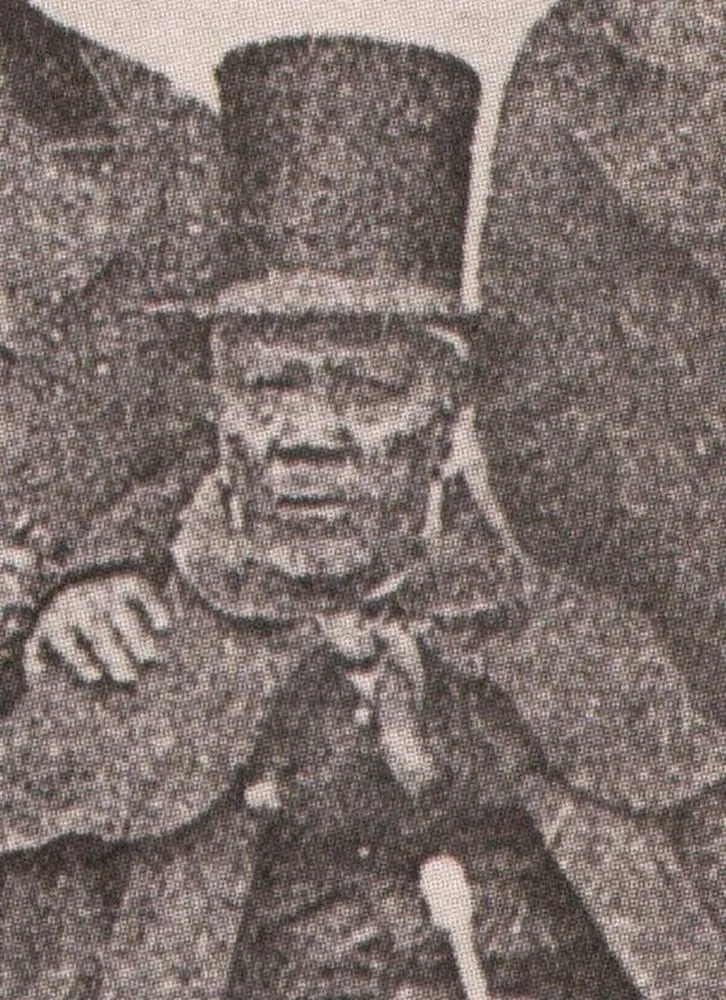
Moshoeshoe I founded the Basotho nation, gathering clans and refugees from the wars of the early 19th century around his mountain stronghold of Thaba Bosiu, which he occupied in July 1824. He defended it against rivals and later against Boer forces. After the Boers overran much of his land in 1867, he asked for British protection, and in March 1868 Basutoland became a British protectorate within borders close to Lesotho's today. He died in 1870 and is buried at Thaba Bosiu. Sources place his birth between about 1786 and 1790.
Early life
Moshoeshoe was born in the late 18th century near the upper Caledon River, in what is now northern Lesotho. Sources place his birth between about 1786 and 1790. He was the son of a minor chief of the Bamokoteli, a small branch of the Sotho-speaking peoples. By about 1820 (some sources say 1822) he had become a chief in his own right, settled at the mountain of Butha-Buthe.
Times of upheaval
The 1820s were a time of war and upheaval across the interior of southern Africa, known in Sesotho as the Difaqane and in Nguni languages as the Mfecane. Raids, famine and the movement of whole peoples drove many communities from their homes. Moshoeshoe's people at Butha-Buthe came under attack.
Thaba Bosiu
In 1824 Moshoeshoe led his followers south to Thaba Bosiu, a flat-topped mountain with steep cliffs and a water supply on its summit. It became a natural fortress and the centre of his kingdom. From there he took in refugees, lineages and whole chiefdoms broken by the wars. He forgave former enemies and lent cattle to the poor and the newcomers, a practice known as mafisa that helped bind different clans to him. In this way many groups of different origins were joined into one people, the Basotho.
Missionaries and writing
In 1833 missionaries from the Paris Evangelical Missionary Society arrived at Thaba Bosiu, invited by Moshoeshoe. They set up mission stations, and between 1837 and 1855 they developed a way of writing Sesotho and printed works in the language. Moshoeshoe welcomed them partly as a source of knowledge about the wider world and the Europeans arriving in the region.
Wars with the Free State
Disputes over land with Boer settlers and the Orange Free State led to a series of wars, the Basotho Wars, between 1858 and 1868. In 1865 Free State forces besieged Thaba Bosiu but could not take it. In April 1866, with his people's food supplies exhausted, Moshoeshoe accepted the Peace of Thaba Bosiu. Fighting resumed, and by 1867 the Boers had overrun much of his country.
British protection
Moshoeshoe had long asked the British for protection against the Boers. He appealed to Sir Philip Wodehouse, the British high commissioner at the Cape. On 12 March 1868 Britain agreed to place his country under its protection as Basutoland, and the Boers were ordered to leave. The borders set in the following years are close to those of Lesotho today. Britain later attached Basutoland to the Cape Colony; sources date this to 1869 or 1871.
Death and legacy
Moshoeshoe died at Thaba Bosiu on 11 March 1870 and was buried on its summit. He is honoured as the founder of the Basotho nation and of Lesotho, which became independent in 1966. Thaba Bosiu, with his grave, is on UNESCO's tentative list for World Heritage status. Historians remember him for building a nation out of refugees and for using diplomacy as well as defence to keep his people's independence.
Achievements
- 1824: Settled at Thaba Bosiu, which became the capital of the Basotho
- United many clans and refugee groups into one Basotho nation
- 1868: Secured British protection, keeping Lesotho separate from the Boer republics
Related entries
Sources
- South African History Online, "King Moshoeshoe I" (Reference)
- UNESCO World Heritage Centre, Tentative List, "Thaba Bosiu" (Primary source)
- South African History Online, "Basotho" (Reference)
- South African History Online, "The three Basotho Wars (1858-68) and the formation of Lesotho" (Reference)
- Encyclopaedia Britannica, "Lesotho: The Sotho kingdom, 1824–69" (Reference)
Share and cite
Cite this page
“Moshoeshoe I.” Kemet to Now, https://kemettonow.com/entry/moshoeshoe-i.
Spotted an error or have a better source? Suggest a correction.