Jaja of Opobo
c. 1821 – 1891
Opobo, Niger Delta, Nigeria
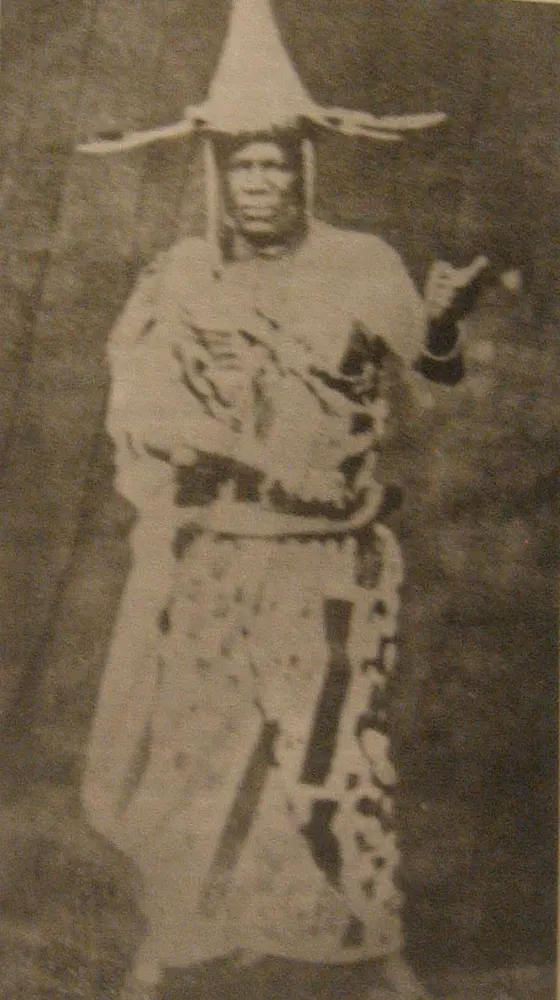
Jaja of Opobo (about 1821 to 1891) was an Igbo man sold into slavery as a boy who rose to head the Anna Pepple trading house in Bonny, in the Niger Delta. Around 1869 to 1870 he founded the state of Opobo and controlled much of the region's palm oil trade, until the British seized him in 1887 and sent him into exile. He died in 1891 on his way home.
From captive to chief
Jaja was born around 1821 in the Igbo country of what is now south-eastern Nigeria; Nigerian sources name Umuduruoha in Amaigbo, in today's Imo State. Royal Museums Greenwich gives his birth name as Jubo Jubagah. At about the age of 12 he was sold into slavery and taken to Bonny, a trading city-state in the eastern Niger Delta. There he was bought by a chief of the Anna Pepple House, one of the great trading "houses" that organised Bonny's commerce.
In the Delta houses, a capable enslaved man could rise through trade. Jaja did. He became known as a skilled trader and went on to head the Anna Pepple House. Under his leadership it grew very wealthy.
Founding Opobo
Rivalry between the houses turned to conflict in Bonny. Around 1869 Jaja left with his followers and settled at a new site between Bonny and the inland markets that produced palm oil. There he founded Opobo and declared it independent. Sources give 1869 or 1870 for the founding.
The site was well chosen. Opobo stood between the inland Igbo palm oil markets and the European ships on the coast, and Jaja controlled the trade that passed through. Palm oil was in high demand in industrial Britain. Jaja dealt directly with the European merchants who came to buy it.
Conflict with Britain
In the 1880s Britain was extending its control over the Niger Delta, and British traders wanted to buy directly from the inland markets. Jaja refused to allow it and taxed the traders who came to Opobo. In 1887 the British vice-consul, Harry Hamilton Johnston, invited Jaja to talks. Accounts say Johnston arrived with a gunboat, HMS Goshawk, and that Jaja was seized once he came aboard. Historians such as Patrick Manning describe it as an abduction.
On 21 September 1887 Jaja was taken out of the Opobo River for trial in Accra, on the Gold Coast (now Ghana). He was charged with obstructing trade, including making people in his markets swear oaths not to deal directly with European agents. On 1 December 1887 he was found guilty and exiled to the British West Indies, first to St. Vincent and later to Barbados. His case was raised in the British House of Commons in 1888 and again in 1890.
Death and memory
In 1891 the British allowed Jaja to go home. He died on the journey, at Santa Cruz on Tenerife in the Canary Islands, on 8 July 1891. His body was later returned to Opobo and buried there. Some accounts say he was poisoned, but this is an allegation that the sources do not confirm. After his removal and death, Opobo's power declined quickly.
Today Jaja is remembered in Nigeria as a king who rose from slavery, built a trading state with his own hands and resisted British control of African trade. Like Efunroye Tinubu in Lagos, he shows how Africans themselves organised the West African trade of the 19th century until colonial rule took it from them.
Achievements
- About 1833: Sold into slavery at about age 12 and taken to Bonny
- Rose to head the Anna Pepple trading house in Bonny
- 1869 or 1870: Founded the trading state of Opobo
- Controlled the palm oil trade between inland markets and European traders on the coast
- 1887: Seized by the British consul and tried in Accra; exiled to the West Indies
- 8 July 1891: Died at Tenerife on his way home
Related entries
Sources
- Encyclopedia.com (Encyclopedia of World Biography), "Ja Ja of Opobo" (Reference)
- Africa Defense Forum, "King Jaja of Opobo" (Reference)
- University of Oklahoma, SHAREOK repository, thesis on Jaja of Opobo's exile (1887–1891) (Scholarly)
- UK Parliament, Hansard, House of Commons debate "Africa (West Coast) - King Ja Ja of Opobo", 2 March 1888 (Primary source)
- Royal Museums Greenwich, "Jubo Jubagah, known as Jaja (circa 1821-1891)" (Reference)
Share and cite
Cite this page
“Jaja of Opobo.” Kemet to Now, https://kemettonow.com/entry/jaja-of-opobo.
Suggest a correction: opens once the database is connected.