Harry Pace
1884 – 1943
New York City; Chicago
Harry Herbert Pace was a businessman born in Covington, Georgia, who in 1921 founded Black Swan Records in New York, widely described as the first major Black-owned record label. The company went bankrupt in 1923 and was sold to Paramount; Pace later led Supreme Liberty Life Insurance in Chicago.
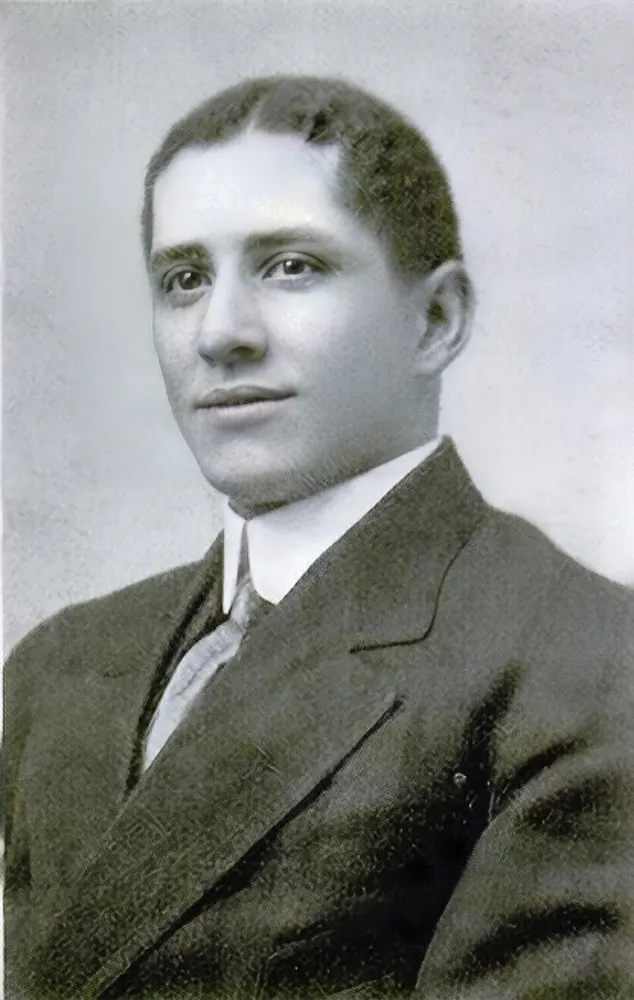
Early life and education
Harry Herbert Pace was born in Covington, Georgia, in 1884. He was a gifted student: he finished elementary school at about twelve and graduated as valedictorian of Atlanta University a few years later. One of his teachers there was W. E. B. Du Bois, who would later work with him in business.
Memphis and W. C. Handy
Pace worked in publishing and insurance in the South. With Du Bois he co-published a short-lived magazine, The Moon Illustrated Weekly, and a draft card from 1917 to 1918 lists him with Standard Life Insurance. Around 1912, in Memphis, he met the composer W. C. Handy. The two wrote songs together and founded the Pace and Handy Music Company, a music publishing firm that later moved to New York City.
Black Swan Records
In the spring of 1921 Pace launched Black Swan Records in New York. It is widely described as the first record label owned by an African American with wide distribution. The label took its name from Elizabeth Taylor Greenfield, the 19th-century singer known as "the Black Swan," and Du Bois sat on its board.
Black Swan recorded Black artists, including concert singers as well as popular musicians, at a time when the big white-owned record companies offered Black musicians few chances. The company did not last long. Pace declared bankruptcy, and the label's catalogue went to Paramount Records. Sources differ on the dates: some give bankruptcy in December 1923, others the sale to Paramount in 1924.
Insurance
After Black Swan, Pace returned to insurance. In 1925 he founded the Northeastern Life Insurance Company in Newark, New Jersey, which became one of the larger Black-owned businesses in the North. He later moved to Chicago, where he served as president of Supreme Liberty Life Insurance Company.
Law and the fight against restrictive covenants
Pace also trained as a lawyer. In Chicago he fought the racially restrictive covenants that kept Black families out of many neighbourhoods. He was involved in the case Hansberry v. Lee, which reached the U.S. Supreme Court and was won in 1940.
A later life in question
Pace's last years are the least clear part of his story. The 2021 NPR Radio Diaries feature reports that the 1930 census lists Pace and his family as "negro," while the 1940 census lists him as white, which suggests that he and his family began passing as white. He died in 1943. Historians and journalists have only recently brought his story back to wide attention, presenting him as a pioneer of Black-owned music and finance whose name was nearly lost.
Achievements
- 1921: Founded the Pace Phonograph Corporation, which issued records under the Black Swan label
- 1923–1924: Black Swan went bankrupt and was sold to Paramount Records
- Later served as president of Supreme Liberty Life Insurance Company in Chicago
Related entries

Sources
- BlackPast, "Harry Pace (1884-1943)" (Reference)
- Radiolab (WNYC Studios), "The Vanishing of Harry Pace" (2021) (Reference)
- NPR, Radio Diaries, "Harry Pace and the rise and fall of Black Swan Records" (2021) (Reference)
- Discography of American Historical Recordings (UC Santa Barbara Library), "Harry Pace" (Reference)
Share and cite
Cite this page
“Harry Pace.” Kemet to Now, https://kemettonow.com/entry/harry-pace.
Spotted an error or have a better source? Suggest a correction.