Father Divine
c. 1876 – 1965
Sayville and Harlem, New York; Philadelphia
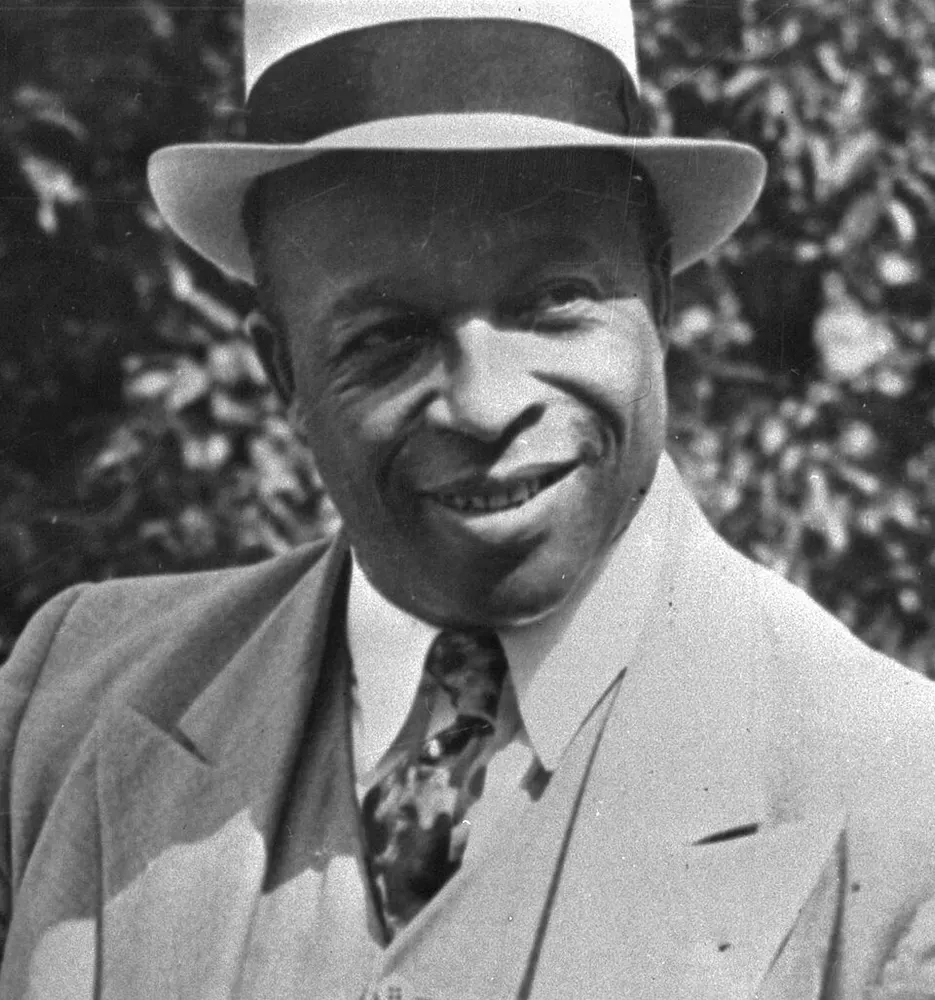
Father Divine, probably born George Baker, founded the International Peace Mission Movement, an interracial religious movement that ran communal "heavens" offering housing and jobs during the Great Depression. It opposed segregation and organised anti-lynching protests, and is now often seen as a forerunner of the civil rights movement, though it was also called a cult in its day. Little is certain about his early life, and sources give birth years from 1865 to 1889.
An uncertain beginning
Father Divine was one of the best-known religious leaders in the United States during the Great Depression. Much about his early life is unknown. He was probably born George Baker, in the American South, and sources give birth years ranging from 1865 to 1889. He later took the name Major Jealous Divine, and his followers called him Father Divine. He did not discuss his past, and he taught that it did not matter.
The first "heaven" at Sayville
Around 1919 Divine, his first wife and a small group of Black and white followers settled in a house in Sayville, on Long Island, New York. They lived together as a community, sharing work and income. Divine found jobs for members and offered free meals to visitors. The household became the first of what followers called "heavens," and it drew growing crowds by the late 1920s.
Arrest and fame
The crowds alarmed some white neighbours in Sayville. In 1931 police arrested Divine and many of his followers and charged them with disturbing the peace. He was convicted and sentenced the following year. According to many accounts, the judge died suddenly a few days after the sentencing. Many followers took the death as a sign of Divine's power, and newspapers across the country covered the story. Divine's conviction was later overturned on appeal. The episode made him famous.
The Peace Mission in Harlem
In the early 1930s Divine moved his headquarters to Harlem. His International Peace Mission Movement ran "heavens" in Harlem and in other cities in the United States and abroad: hotels, boarding houses, restaurants and shops run on a shared, cooperative basis. During the Depression they offered cheap meals, clean rooms and jobs to thousands of poor people, Black and white. BlackPast notes that the movement fed, housed and found work for large numbers of people at a time when public relief was thin.
Teachings and way of life
Divine's followers believed that he was God in human form, a claim that his critics found outrageous. Members of the movement took new spiritual names, gave up alcohol, tobacco and gambling, and lived celibate lives, even if they had been married; men and women lived on separate floors. At the same time the movement's homes and hotels were open to people of every race, which was unusual at the time. Divine opposed segregation, rejected labels of race, and supported campaigns against lynching.
Philadelphia and Woodmont
In 1942 Divine moved the movement's headquarters to Philadelphia. In 1946 he married a young white Canadian follower, Edna Rose Ritchings, who became known as Mother Divine. In the early 1950s the movement moved into Woodmont, an estate in Gladwyne, outside Philadelphia; sources give 1952 or 1953. Father Divine died at Woodmont on 10 September 1965. Mother Divine led the movement for more than fifty years after his death, until she died at Woodmont in 2017.
How historians see him
Father Divine was controversial in his lifetime. Newspapers and many church leaders called the Peace Mission a cult and mocked his claim to be divine. Later historians have looked again. Robert Weisbrot, in Father Divine and the Struggle for Racial Equality (1983), and Jill Watts, in God, Harlem U.S.A. (1992), place him within the history of Black struggle against racism and poverty. The Encyclopedia of Greater Philadelphia notes that he is now often seen as a forerunner of the civil rights movement, while also recording the criticisms made of him. Both views are part of his story.
Achievements
- 1919: Set up the first Peace Mission "heaven" in Sayville, New York, with his first wife and a small interracial group
- 1930s: Led one of the best-known religious movements of the Depression from Harlem, with Peace Missions across the U.S. and abroad
- 1942: Moved the movement's headquarters to Philadelphia
Related entries
Sources
- BlackPast, "Father Divine (c.1876-1965)" (Reference)
- Encyclopedia of Greater Philadelphia, "International Peace Mission Movement and Father Divine" (Scholarly)
- World Religions and Spirituality Project, "Father Divine Peace Mission Timeline" (Scholarly)
- Historical Society of Montgomery County (Pennsylvania), "Father Divine and the Peace Mission Movement" (Reference)
Share and cite
Cite this page
“Father Divine.” Kemet to Now, https://kemettonow.com/entry/father-divine.
Suggest a correction: opens once the database is connected.