A. Philip Randolph
1889 – 1979
New York; Washington, D.C.
Labor organizer who built the Brotherhood of Sleeping Car Porters from 1925 and whose threatened 1941 march on Washington led to Executive Order 8802; he was also a principal organizer of the 1963 March on Washington.
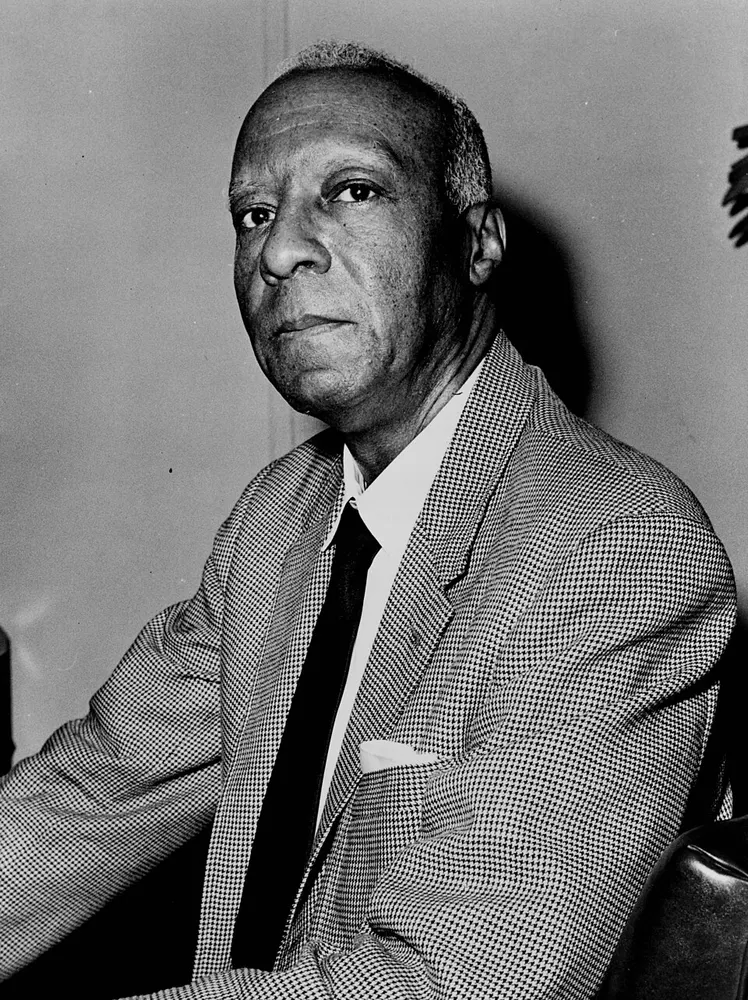
Florida roots
Asa Philip Randolph was born on April 15, 1889, in Crescent City, Florida, where his father was a preacher. In 1891 the family moved to Jacksonville. His parents were strong supporters of equal rights for African Americans. He graduated from the Cookman Institute in Jacksonville and in 1911 moved to New York City.
The Messenger
In 1917, during the First World War, he and Chandler Owen, a law student and fellow socialist, founded a political magazine, The Messenger. In 1918 the two men were arrested and briefly jailed on a charge of sedition.
Organizing the porters
In 1925 Randolph organized the porters who worked on the Pullman Company's sleeping cars, and the Brotherhood of Sleeping Car Porters was founded on August 25 of that year. The struggle for recognition took twelve years. In 1937 Pullman finally recognized the union. When the Brotherhood signed its first contract with the company, its membership rose to nearly 15,000. It is described as the first African American labour union to sign a collective bargaining agreement with a major U.S. corporation, and it became the first Black union in the American Federation of Labor.
The threatened march of 1941
Early in the Second World War, Randolph launched the March on Washington Movement and threatened to bring 100,000 African Americans to the capital unless President Franklin D. Roosevelt opened up more jobs to Black workers. On June 25, 1941, Roosevelt signed Executive Order 8802, which barred discrimination in the defence industries.
After the war Randolph kept up the pressure. The Department of Labor credits him with persuading President Harry S. Truman to ban discrimination in federal employment and in the armed services.
A leader in labour and civil rights
In 1955 Randolph became a vice president of the American Federation of Labor and Congress of Industrial Organizations (AFL-CIO). He served on its executive council until 1974 and used his place to push the unions, many of them still segregated, to open their ranks to Black workers.
The 1963 March on Washington
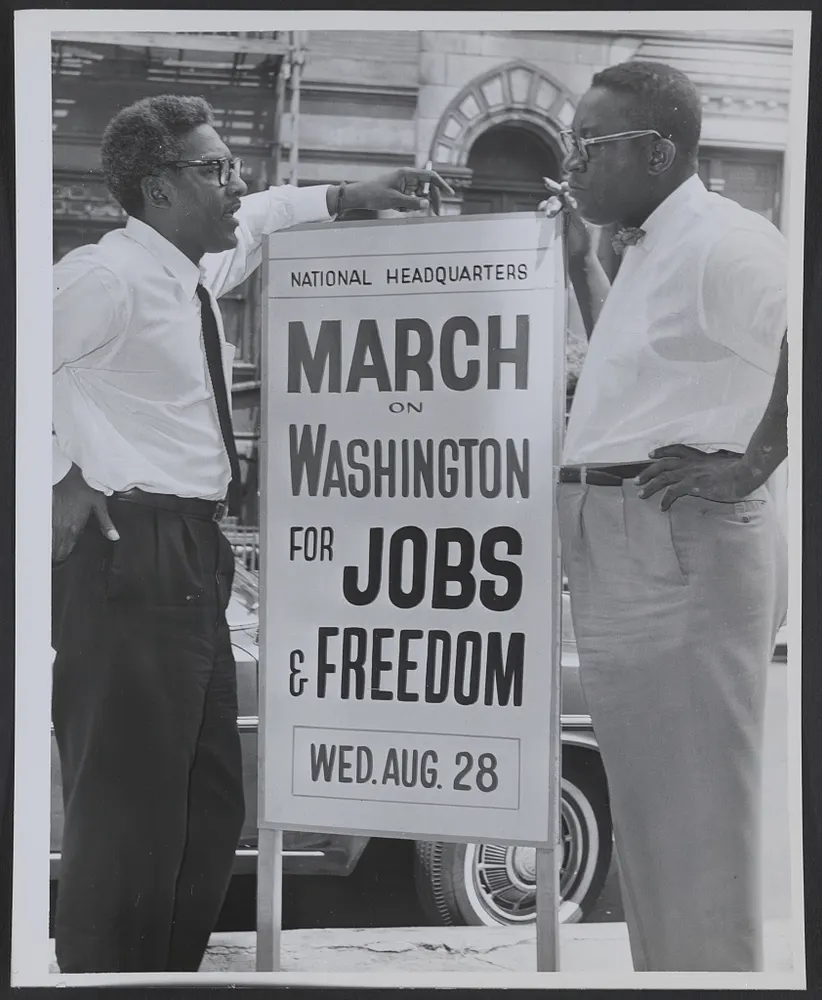
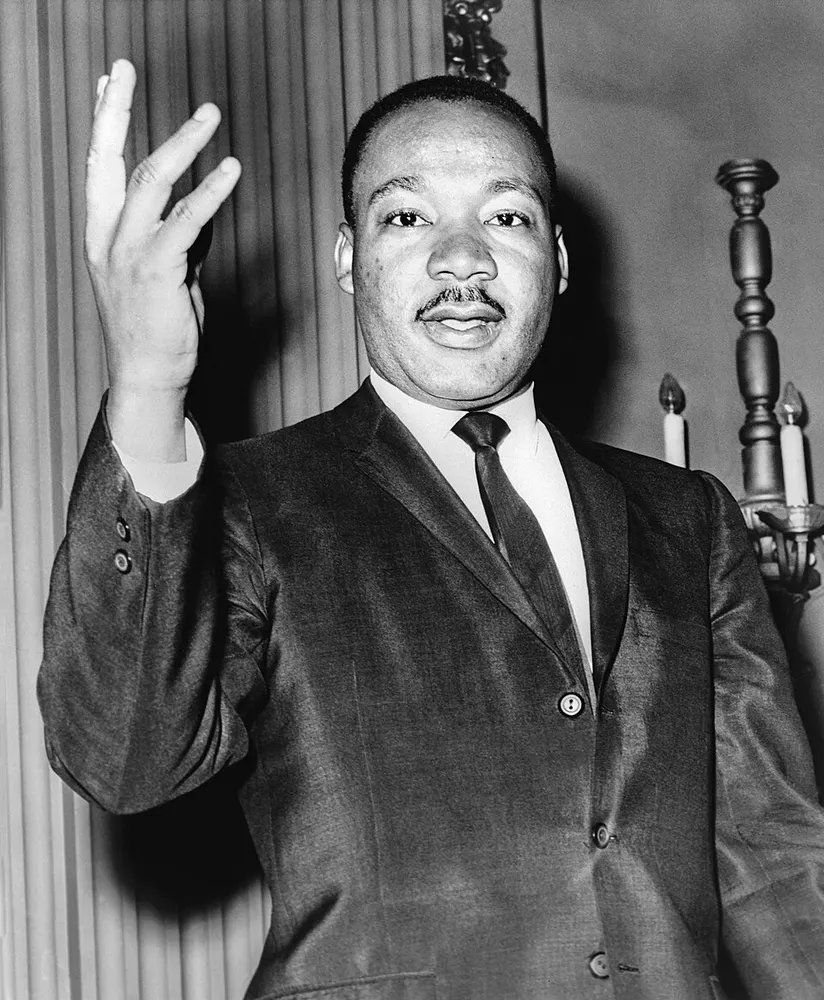
More than twenty years after his first threatened march, Randolph was a principal organizer of the 1963 March on Washington, alongside Bayard Rustin and Martin Luther King Jr. Sources credit the march with paving the way for the Civil Rights Act passed the following year.
Later years
Randolph retired as president of the Brotherhood of Sleeping Car Porters in 1968. He died on May 16, 1979. In 1989 the Department of Labor named him to its Labor Hall of Honor.
Achievements
- 1917: co-founded The Messenger with Chandler Owen
- 1925: began leading the Brotherhood of Sleeping Car Porters
- 1937: won recognition and a first contract from the Pullman Company
- June 25, 1941: Executive Order 8802 barred discrimination in defense industries after Randolph's March on Washington Movement
- 1955: became a vice president of the AFL-CIO
- 1963: principal organizer of the March on Washington
Related entries
Sources
- National Archives, "Executive Order 8802: Prohibition of Discrimination in the Defense Industry (1941)" (Primary source)
- AFL-CIO, "A. Philip Randolph" (Reference)
- New York Public Library Archives, "Brotherhood of Sleeping Car Porters collection" (Primary source)
- Martin Luther King, Jr. Research and Education Institute, Stanford University, "Randolph, A. Philip" (Scholarly)
- Library of Congress, This Month in Business History, "A. Philip Randolph, Labor & Civil Rights Activist Born" (Reference)
- U.S. Department of Labor, Hall of Honor, "A. Philip Randolph" (1989 inductee) (Primary source)
- Chicago History Museum, "The Brotherhood of Sleeping Car Porters" (Reference)
Share and cite
Cite this page
“A. Philip Randolph.” Kemet to Now, https://kemettonow.com/entry/a-philip-randolph.
Suggest a correction: opens once the database is connected.