The Haitian Revolution
1791 – 1804
Saint-Domingue (Haiti), Caribbean
Beginning with a mass uprising of enslaved people in northern Saint-Domingue in August 1791, the revolution ended slavery in the French colony, defeated Napoleon's army in 1803 and produced Haiti's independence on 1 January 1804.
Background
Saint-Domingue, the western part of the island of Hispaniola, was a French colony whose sugar and coffee plantations ran on the forced labour of enslaved Africans. The French Revolution unsettled the colony. In late 1790 Vincent Ogé, a free man of colour who had pressed the Paris assembly for reform, led a revolt and was executed. In May 1791 France granted citizenship to some wealthier free people of colour, but white colonists refused to comply.
The uprising of 1791
On the night of August 21–22, 1791, enslaved people rose in the northern plain south of Cap Français. A meeting of leaders at the Lenormand plantation on August 14 appears to have planned it. Tradition also links its start to a Vodou ceremony at Bois Caïman. The John Carter Brown Library notes that historians still debate the exact nature and timing of both events. The Provincial Assembly of the North reported that more than two hundred sugar plantations and most of the province's coffee plantations were destroyed.
Abolition and Toussaint Louverture
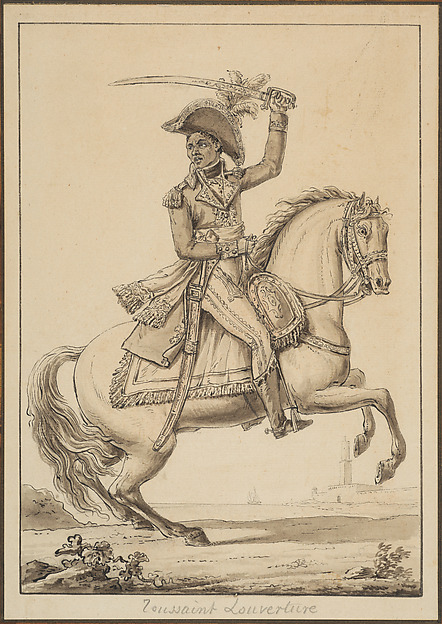
In 1793 the French commissioner Léger-Félicité Sonthonax offered freedom to enslaved people who joined his forces and then abolished slavery altogether. The National Convention in Paris confirmed abolition in 1794. Toussaint Louverture, a formerly enslaved man who had become the leading military commander, brought his forces over to France and gained control of several regions. He kept nominal loyalty to France while following his own policy, and in 1801 he named himself governor-general for life.
War of independence
In 1802 Napoleon sent an expedition under General Charles Leclerc to restore French authority. Toussaint fought for several months, agreed to an armistice, and was then seized and shipped to France, where he died in prison on April 7, 1803. Carolyn Fick writes that news that slavery had been restored in Guadeloupe set off a mass uprising in the summer of 1802. Jean-Jacques Dessalines left the French in October and led an indigenous army, with Henry Christophe among its commanders. Its victory at Vertières on November 18, 1803, ended the expedition, and the French commander Rochambeau surrendered the next day.
On January 1, 1804, Dessalines and his officers proclaimed independence and gave the country the name Haiti, taken from the Taíno name for the island. In 1804 Dessalines ordered killings of French residents, which Fick estimates took at least 2,000 lives.
Women in the revolution
The Library of Congress highlights women whose roles were long overlooked. They include Sanité Bélair, a lieutenant executed by the French in 1802; Marie-Jeanne Lamartinière, who fought at Crête-à-Pierrot; and Catherine Flon, who sewed the first Haitian flag.
Legacy
The revolution is widely described as the largest and most successful revolt of enslaved people in modern history. Recognition came slowly. In 1825 France accepted Haitian independence only in return for an indemnity of nearly 100 million francs, which Haiti paid in instalments until 1887. The United States did not recognize Haiti until 1862.
Achievements
- Enslaved people rise in the northern plain of Saint-Domingue (night of August 21–22, 1791)
- Commissioner Sonthonax abolishes slavery in the colony (1793)
- French National Convention confirms abolition (1794)
- Leclerc expedition sent to restore French control (1802)
- Victory at Vertières ends the French expedition (November 18, 1803)
- Declaration of Haitian independence (January 1, 1804)
Related entries
Sources
- Encyclopaedia Britannica, "Haiti: The Haitian Revolution" (Reference)
- Library of Congress Research Guides, "Women in the Haitian Revolution" (Primary source)
- Carolyn Fick, Bibliothèque nationale de France (France-Amériques), "Jean-Jacques Dessalines and the Independence of Haiti" (Scholarly)
- John Carter Brown Library, Brown University, "The August 1791 Slave Revolt" (Scholarly)
Suggest a correction: opens once the database is connected.