Esoteric Studies: this section explores ideas outside mainstream scholarship. Each claim is labeled so you can judge it for yourself.
Esoteric Studies · The Anunnaki and Africa
Cush, Nimrod and "the black-headed people"
The claim
Africans, called Cushites, were present at the founding of Sumer, the land of the Anunnaki.
Two real texts sit at the center of this claim: Genesis, which makes Cush the father of the Mesopotamian king Nimrod, and Sumerian writings in which people are called "the black-headed". Black scholars and mainstream assyriologists read them differently.
What the evidence shows
Genesis. In the Bible's Table of Nations (Genesis 10), Cush is a son of Ham and a brother of Mizraim (Egypt). Cush is then named as the father of Nimrod, a mighty king whose realm began with Babel, Erech (Uruk) and Akkad "in the land of Shinar", which is Sumer and Babylonia. Elsewhere in the Bible, Cush usually means the Nile kingdom south of Egypt, in today's Sudan.
"The black-headed". Sumerian texts call people ug sag-gi-ga, "the black-headed people", and Akkadian texts use the same phrase (nišū ṣalmat qaqqadi). In both literatures it refers to human beings in general (Mander).
Who says more, and why
Drusilla Dunjee Houston, in Wonderful Ethiopians of the Ancient Cushite Empire (1926), argued that an ancient Cushite (Ethiopian) civilization spread across Arabia, Chaldea, Babylonia, Persia and India. Her chapters on "The Strange Races of Chaldea" and "Babylonia the Land of Marvels" place Cushites at the root of Mesopotamian civilization.
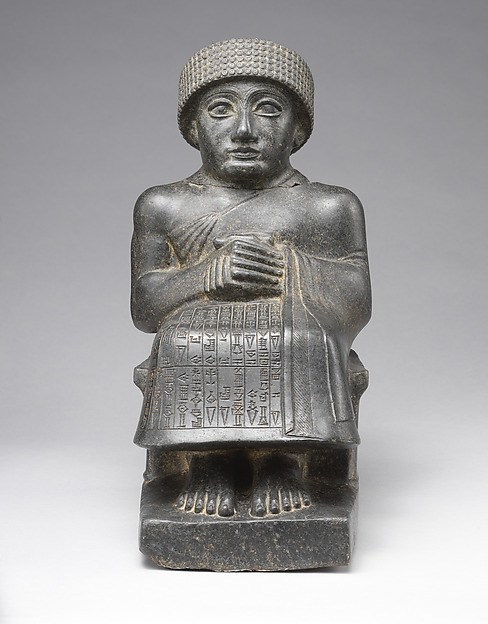
Runoko Rashidi (1954–2021), writing in African Presence in Early Asia (1985) and later, called Sumer the "formative civilizing influence in early West Asia" and pointed to the Sumerians' name for themselves, "the Blackheaded people", to Gudea's preference for very dark stone in his statues, and to other evidence he read as signs of an African origin. Rashidi also cites Cheikh Anta Diop on an African presence in neighboring Elam.
What critics say
Most assyriologists read "black-headed" as a poetic word for human beings. Pietro Mander notes that scholars have never fully explained why the phrase was chosen. He links it to the dark earth and clay from which, in Sumerian myth, people were made, rather than to skin colour.
On Genesis, some scholars think the Cush who fathered Nimrod refers to the Kassites (Kaššu), who ruled Babylon from about 1600 BCE, rather than to Nile Valley Cush. J. Daniel Hays finds that link "tenuous" and holds that Cush in the Bible normally means the African kingdom. He calls Nimrod himself "an enigma" whom no proposed identification fits convincingly.
Our assessment: the texts are real, and the Genesis passage does tie an African name to the founding of Mesopotamian cities. Whether that reflects real history, a scribal confusion, or a later tradition is debated. The "black-headed" phrase does not, on its own, show that Sumerians were African.
In the encyclopedia
Sources
- Genesis 10:6–12 (New International Version), via Christianity.com (Primary source)
- J. Daniel Hays, "The Cushites: A Black Nation in the Bible", Bibliotheca Sacra 153(612), 1996 (Scholarly)
- Pietro Mander, "Man between Heaven and Earth in Sumerian Thought", in A Passion for China: Essays in Honour of Paolo Santangelo (Brill, 2005), pp. 203–217 (Scholarly)
- Drusilla Dunjee Houston, "Wonderful Ethiopians of the Ancient Cushite Empire" (1926), full text at Sacred Texts (Primary source)
- Runoko Rashidi, "Africans in Early Asian Civilizations: A Historical Overview", in African Presence in Early Asia (1985), pp. 15–53 (University of Tübingen library record) (Scholarly)
- Runoko Rashidi, "Before Enslavement: Africa's Ancient Diaspora", drrunoko.com (Primary source)