Rastafari
1930s – present
Jamaica; now worldwide
Anticolonial, African-centered faith that arose in Kingston, Jamaica, after Haile Selassie's 1930 coronation. Adherents regard him as divine, read the Bible through that lens, and draw on Marcus Garvey's Pan-Africanism.
Origins
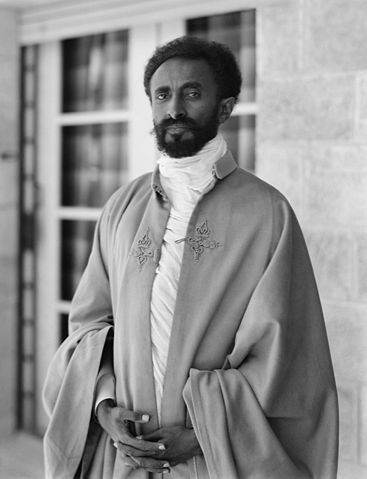
Rastafari arose in Jamaica in the 1930s as an African-identified, anticolonial religious movement. Its followers date its beginning to 2 November 1930, when Tafari Makonnen was crowned Emperor Haile Selassie I of Ethiopia. The movement takes its name from his earlier title, Ras Tafari. Many Rastas regard Selassie as God incarnate and a Black messiah.
The movement drew heavily on Marcus Garvey, the Jamaican founder of the Universal Negro Improvement Association. Rastas often cite words attributed to Garvey, usually dated to 1916 or 1920, urging people to look to Africa, where a Black king would be crowned. Garvey himself, however, did not approve of Rastafari.
Early leaders and repression
Early preachers included Leonard P. Howell, Joseph Hibbert, Archibald Dunkley and Robert Hinds. Howell, whom the journalist Hélène Lee calls "the first Rasta," was arrested for sedition in 1934. In 1940 he founded Pinnacle, a commune in the hills of St. Catherine. Police raided it in 1941 and destroyed it in 1954, and many residents resettled in poor districts of western Kingston. In 1958 Prince Emmanuel Edwards founded the Bobo Shanti community and called a large gathering, or Binghi.
Beliefs and practice
Rastas call God Jah. They use the King James Bible together with other texts, including the medieval Ethiopian Kebra Nagast and Howell's The Promised Key (1935). "Babylon" names the oppressive colonial and capitalist system. "Zion," the promised land, is usually Ethiopia or Africa as a whole.
Practice centers on "reasonings," gatherings for discussion. Many Rastas use ganja (cannabis) as a sacrament. The main communal celebration is the Binghi (also called Nyabinghi or Groundation), which includes drumming, chanting and scripture reading.
Rastafari has no central authority. Scholars such as Ennis B. Edmonds describe several "mansions," or houses, with different emphases. The Twelve Tribes of Israel engage closely with the wider world, while the Nyabinghi favor stricter separation.
Repatriation and spread
Return to Africa is a central hope. A repatriation attempt failed in 1959. Haile Selassie's visit to Jamaica on 21 April 1966, remembered as Groundation Day, was seen by many as a step toward return. Selassie granted land at Shashamane in Ethiopia to settlers from the diaspora, and a community remains there. The historian Monique Bedasse has also studied Rastafari repatriation to Tanzania.
From the late 1960s, the reggae musician Bob Marley carried Rastafari ideas worldwide, especially to Britain and the United States in the 1970s. Rasta communities now exist from Senegal to New Zealand and Japan.
Achievements
- 2 Nov 1930: Ras Tafari Makonnen crowned Emperor Haile Selassie I of Ethiopia
- 1934: early preacher Leonard Howell arrested for sedition
- 1940: Howell founds the Pinnacle commune in St. Catherine
- 1958: Prince Emmanuel Edwards founds the Bobo Shanti house
- 21 Apr 1966: Haile Selassie visits Jamaica, now marked as Groundation Day
- 1970s: Bob Marley carries Rastafari ideas to Britain and the US
Related entries
Sources
Suggest a correction: opens once the database is connected.