Ma'at
Attested from the Old Kingdom (c. 2613 – 2181 BCE) through the Ptolemaic period (ended 30 BCE)
Egypt
Ancient Egyptian concept of truth, justice and cosmic order, also honoured as a goddess with an ostrich feather; kings were expected to uphold it, and hearts were weighed against her feather.
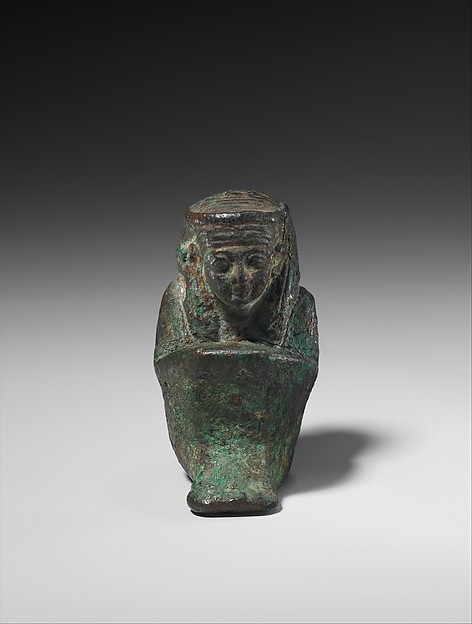
A principle and a goddess
Ma'at was the ancient Egyptian idea of truth, justice, balance and cosmic order. It roughly meant what was correct and in its proper place. Britannica describes it as the divine order set up at creation and renewed each time a new king came to the throne. Ma'at was also personified as a goddess, usually shown as a woman wearing a tall ostrich feather on her head. The feather alone could stand for her, and it was used to write her name.
As a goddess she appears from the Old Kingdom onward, including in the Pyramid Texts. Texts call her the daughter of the sun god Ra, and she is linked with Thoth, god of wisdom, who is generally named as her consort. Osiris carried the title "lord of ma'at." Joshua J. Mark notes that she had no temples or official clergy of her own. The title "priest of Ma'at" seems to have been an honour given to officials who judged cases in her name.
Order against chaos
The opposite of ma'at was disorder, which Egyptian texts call isfet. The Fitzwilliam Museum describes how chaos was pictured as a watery wasteland beyond the temple walls. Temples were built to embody ma'at on earth. Because chaos could break in if no successor quickly claimed the throne, the death of a king was a dangerous moment.
The king's duty
Keeping ma'at was the king's central task. Britannica describes him as the one who set ma'at in place of isfet on humanity's behalf. A ruler who could not maintain balance was seen as unfit. Kings were often called "beloved of Ma'at." Temple reliefs show them offering a small figure of the goddess to deities such as Amun, Ra and Ptah. Smarthistory notes that some texts say the gods "live on Ma'at." Battle scenes of a king striking down enemies may sometimes show this duty in symbolic form rather than record real events. In Ptolemaic times, according to the Fitzwilliam, ma'at was understood as a gift from the gods that the king kept and returned to them in good condition.
Judgment of the dead
Ma'at was not only for kings. Ordinary people were expected to live by it, and it shaped the judgment after death. In the Hall of the Two Truths, the heart of the deceased was weighed against Ma'at's feather before Osiris and the Forty-Two Judges. The dead person recited a "negative confession" denying a list of wrongdoings. Someone whose heart balanced the scale was called "true of voice" and could enter the Field of Reeds. A heart that failed was devoured by the creature Ammut, and Britannica explains that such people were thought to "die a second time."
Legacy
Ma'at tied justice, truth, right rule and the order of nature into one idea. It has become one of the best-known ideas of ancient Egyptian thought.
Achievements
- Old Kingdom (c. 2613–2181 BCE): Ma'at appears as a goddess and principle, including in the Pyramid Texts
- Kings were often called "beloved of Ma'at" and shown offering a small figure of her to the gods
- Weighing of the heart: a person's heart was weighed against Ma'at's feather at the judgment of the dead
- Ptolemaic period (304–30 BCE): ma'at understood as a gift from the gods that the king kept and returned
Related entries
Sources
- Amy Calvert, Smarthistory, "Egyptian deities" (Scholarly)
- The Fitzwilliam Museum, University of Cambridge, "Maat" (Primary source)
- Joshua J. Mark, World History Encyclopedia, "Ma'at" (Reference)
- Encyclopaedia Britannica, "Maat" (Reference)
Suggest a correction: opens once the database is connected.