Kingdom of Kongo
Late 14th century – early 20th century
Parts of present-day Angola, Democratic Republic of the Congo and Republic of the Congo (capital Mbanza Kongo)
Central African kingdom south of the lower Congo River, founded in the late 1300s, whose kings adopted Christianity after Portuguese contact in 1483, while the Atlantic slave trade and wars steadily eroded its power.
Foundation
Kongo oral traditions tell of a kingdom founded at the end of the 14th century, when the leaders Nimi a Nzima and Nsaku Lau allied; Nimi a Nzima's son Lukeni lua Nimi became the first king and made Mbanza Kongo his capital. The town stood on a plateau in what is now northern Angola. Kongo grew into the largest centralised state in Central Africa, with a king who appointed regional governors and was advised by a council of senior nobles. Its economy drew on farming, raffia cloth weaving, copper, salt and ivory, and it used nzimbu shells gathered on Luanda Island as currency.
Portugal and Christianity
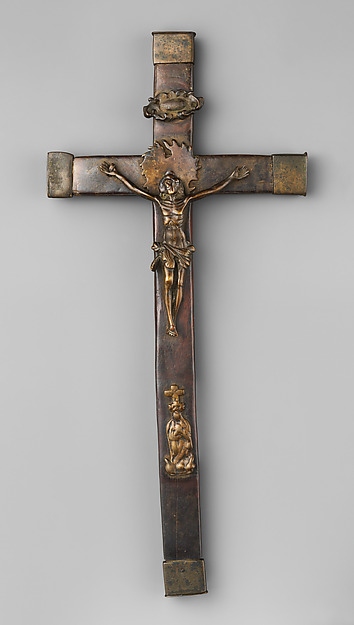
Portuguese ships under Diogo Cão reached the Congo estuary in 1483. Relations began as trade and diplomacy, and in 1491 King Nzinga a Nkuwu was baptised as João I. His successor Afonso I (Nzinga Mbemba) promoted Christianity, read and wrote Portuguese and sent young nobles to study in Europe; his son Henrique was made a bishop in 1518. Christianity in Kongo kept many local customs, and Kongo artists made brass crucifixes blending European and local styles. UNESCO notes that Kongo sent the first ambassador from a sub-Saharan African state accredited at the Vatican, in 1608, and that the first catechism in Kikongo was written at Mbanza Kongo in 1624. The Portuguese renamed the capital São Salvador.
The slave trade
Portuguese sugar plantations on São Tomé created rising demand for captives. Afonso I sought to keep the trade under royal control and resisted Portuguese settlement. In a 1526 letter to João III of Portugal, one of a series he wrote, he complained that merchants were kidnapping free people, nobles and even his own relatives, and asked that the trade be stopped. It continued, and raids to supply it contributed to the Jaga wars of the 1560s, after which Kongo relied on Portuguese help and lost some of its independence.
Wars and decline
Kongo still defended itself: King Pedro II's forces defeated a Portuguese invasion in 1623, and Kongo supported the Dutch seizure of Luanda in 1641. In 1665, however, Kongo suffered a heavy defeat by Portuguese-led forces at Mbwila, a blow from which the kingdom did not recover. Rival claimants fought a long civil war, and São Salvador was sacked and abandoned in 1678. By about 1710 Kongo had lost full independence, although kings continued to hold the title into the 19th century. After the Berlin Conference of 1885, European powers occupied the interior, and the old kingdom's lands were absorbed into Portuguese Angola in the early 20th century.
Legacy
Mbanza Kongo, with the remains of the former cathedral known locally as Kulumbimbi, was inscribed as a UNESCO World Heritage site in 2017, recognised for its role as a gateway for Christianity into Central Africa.
Achievements
- Founded c. late 14th century with its capital at Mbanza Kongo
- King Nzinga a Nkuwu baptised as João I, 1491
- Afonso I protested to Portugal against the slave trade in letters including one of 1526
- First Kikongo-language catechism written at Mbanza Kongo, 1624
- Mbanza Kongo inscribed as a UNESCO World Heritage site, 2017
Related entries
Sources
- Royal Museum for Central Africa (AfricaMuseum), "The Kongo kingdom" (Scholarly)
- UNESCO World Heritage Centre, "Mbanza Kongo, Vestiges of the Capital of the former Kingdom of Kongo" (Primary source)
- Mark Cartwright, World History Encyclopedia, "Kingdom of Kongo" (Reference)
- The Metropolitan Museum of Art, Heilbrunn Timeline of Art History, "Central Africa, 1400–1600 A.D." (Scholarly)
- World History Commons (Roy Rosenzweig Center for History and New Media), "Nzinga Mbemba (Afonso I), letter to João III of Portugal, 1526" (Primary source)
Suggest a correction: opens once the database is connected.